
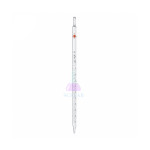
Glass Stirring Rod, 350 x 8 mm

Product Code : SCL-BLE-11775
The Glass Stirring Rod, 350 x 8 mm, mixes solutions, helps solids dissolve and guides liquid into funnels and flasks. At 350 mm it reaches the bottom of tall beakers and large flasks, and its 8 mm thickness makes it stiffer than thin rods. It stands up to common reagents and can be used in hot liquids.
Specifications of the 350 mm Glass Stirring Rod
| Specification | Value |
|---|---|
| Material | Glass |
| Length | 350 mm (35 cm) |
| Diameter | 8 mm |
| Resistance | Chemical resistant, heat resistant |
| Manufacturer | Science Lab Supplies, Saha, Ambala, India |
Stirring, Filtering and Testing with the 350 mm Rod
Hold the rod near its upper end and stir in slow circles. For pouring, touch the rod to the lip of the vessel so the liquid runs down it into the next container instead of dribbling down the outside.
- Making solutions: dissolve a weighed solid in water in one of the Beakers and stir until no crystals remain on the bottom.
- Filtration (Class 6 to 9): pour a mixture down the rod into a Glass Funnel, 75 mm, Short Stem lined with a folded Filter Paper, 120 mm Diameter.
- pH checks: dip the clean rod in the solution and touch it to a strip of indicator paper on a Watch Glass, Pack of 12.
Precautions: never use the rod to lever out caked solids, and do not lay it across the top of a beaker, where it can roll off the bench.
Frequently Asked Questions
What should a lab check on a glass stirring rod before ordering?
Check the length against the deepest vessel in use (350 mm here, while the 200 x 4 mm rod in the range suits test tubes and small beakers), the diameter (8 mm here, for a stiff rod), the glass type if hot liquids will be stirred, and that both ends are fire-polished and rounded so they are safe to handle.
Can the rod be used in hot solutions?
Yes. The rod is heat resistant, so it can stir solutions on a hot plate or over a burner. Avoid thermal shock: never plunge a hot rod into cold water, and let it cool on a heat-proof mat.
How is a stirring rod used to test a solution with litmus paper?
Dip the clean, dry rod into the solution and touch the wet tip to a piece of litmus paper on a watch glass. Dipping the paper into the solution itself would contaminate the sample with dye.
Why must the rod be rinsed between two solutions?
A film of the first liquid stays on the glass. Carried into the next solution, it can shift a pH reading, start an unwanted reaction or spoil a test. Rinse with distilled water and wipe dry before reuse.
How should a solution be stirred so nothing splashes out?
Move the rod in slow, small circles near the bottom, keep the beaker no more than about two-thirds full, and lift the rod out gently. Fast stirring throws drops over the rim, a hazard with acids and hot liquids.
Related Glass Rods and Stirring Equipment
- Glass Stirring Rod, 7 mm: glass stirrer 200 to 350 mm long and 7 mm in diameter.
- Glass Stirring Rod, 200 x 4 mm: clear glass rod, 20 cm long and 4 mm in diameter.
- Glass Rod: colourless glass, about 6 mm in diameter and 200 mm long.
- Magnetic Stirrer Bar: PTFE-coated magnet bar for use with a magnetic stirrer.
- Magnetic Heating Stirrer: stirs up to 1 l at up to 2000 rpm, with heating.
The 350 mm stirring rod is kept with the flasks, beakers and other glass items in Lab Glassware; apparatus for biology practicals is under Biology Lab Equipment.
Glass rods like this one can be exported by Science Lab Supplies, which has an Importer-Exporter Code, to Uganda, the UAE, Saudi Arabia, Oman, the Philippines and Nepal. Use the contact page to ask for a quotation, or build a glassware list in the enquiry cart.
Last updated: 19 November 2026
.jpg)

.png)
.jpg)
.jpg)
.jpg)
