
Glass Dropper Pipette 6 inch (150 mm)
.jpg)
Product Code : SCL-LG-12007
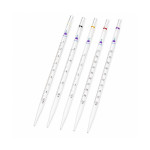
The Glass Dropper Pipette 6 inch (150 mm) is a reusable, non-graduated dropper with a clear borosilicate 3.3 glass tube, a tapered fire-polished tip and a removable black rubber bulb. The pack holds 20 tubes, each about 150 mm long without the bulb, and 20 matching bulbs; single droppers are a separate option. It releases liquid one drop at a time, for indicators, stains and reagents.
Specifications of the Glass Dropper Pipette
| Specification | Value |
|---|---|
| Length | Glass tube about 150 mm (6 in) long; the bulb is not part of this length |
| Tube | Borosilicate 3.3 glass, clear |
| Tip | Tapered, fire-polished |
| Bulb | Black natural rubber, removable, one matched to each tube |
| Delivery | Non-volumetric, no graduations; for drop-by-drop transfer |
| Care | Reusable; supplied non-sterile; only the glass tube goes through steam sterilisation, with the bulb removed |
| Pack | 20 glass tubes with 20 matching black rubber bulbs; a single dropper is a separate option |
| Manufacturer | Science Lab Supplies, Saha, Ambala, India |
Drop-by-Drop Tasks with the Glass Dropper
Push the bulb firmly onto the wide end, squeeze it before the tip goes into the liquid, then release slowly to draw liquid up. Hold the dropper upright over the target and press gently so each drop forms and falls on its own.
- pH spot test (Class 7 to 10): put one drop of each solution onto a strip of Universal pH Indicator Paper, pH 0-14 and match the colour to the chart.
- Metal ion tests (Class 10 and 11): add dilute sodium hydroxide drop by drop to each test solution and note the colour of the precipitate and whether it dissolves in excess.
- Reagent bench: keep one dropper with each indicator stored in a Reagent Bottle, Narrow Mouth, Clear Glass, 60 ml, so no reagent carries over into another.
Rinse the tube straight after use, and take the bulb off before the glass is washed in hot detergent. Never put a dropper into an autoclave with its rubber bulb fitted.
Frequently Asked Questions
Should schools order glass droppers or disposable plastic pipettes?
Glass droppers are washed and reused for years, take most solvents and can be steam-sterilised once the bulb is off. Plastic transfer pipettes cannot break into sharp pieces and suit single-use biology work, but they are thrown away after each class. Many labs keep both.
Why are spare rubber bulbs worth ordering with glass droppers?
Natural rubber gives a strong, soft squeeze but hardens and cracks with age, light, oils and some solvents, and a split bulb no longer draws liquid. Spare bulbs that fit the tube keep a class set in use.
Why must a filled dropper never be turned upside down?
Liquid then runs into the rubber bulb, where it attacks the rubber and stays trapped, so the next liquid drawn up is contaminated. Keep the tip pointing down whenever the dropper holds liquid, and lay it down only when empty.
Can the glass dropper be sterilised for biology work?
Yes, though the droppers are supplied non-sterile. Take the rubber bulb off, wash the glass tube and steam-sterilise the glass alone in an autoclave. The bulb never goes through that cycle; wash it and wipe it with disinfectant instead, then refit it when the tube has cooled.
Related Droppers and Dropping Bottles
- Dropper: straight borosilicate glass dropper with a separate rubber bulb; one fill takes up about 1 to 3 ml.
- Calibrated Plastic Droppers: transparent plastic droppers in 0.5, 1 and 5 ml sizes.
- Glass Dropping Bottle with Colourless Dropper, 60 ml: clear glass bottle supplied with one dropper.
- Amber Glass Dropping Bottle, 60 ml: amber glass bottle with a coloured dropper.
- Dropper Bottle 10 ml: polypropylene bottle with a removable dropper for microscale chemistry.
Glass tubes, bottles and vessels for small-volume work fill Lab Glassware, and indicators and reagent kits are found under Chemistry Lab.
Glass dropper pipettes can be shipped by Science Lab Supplies to Vietnam, Malaysia, Peru, Egypt, Iraq and Nigeria, as the company holds an Importer-Exporter Code. To get a quotation for a class set, write through the contact page or put the droppers in the enquiry cart.
Last updated: 20 November 2026
.png)
.jpg)
.jpg)
.jpg)

.jpg)
.jpg)