Glass-Ceramic Heating Plate
Product Code : SCL-BLE-11638
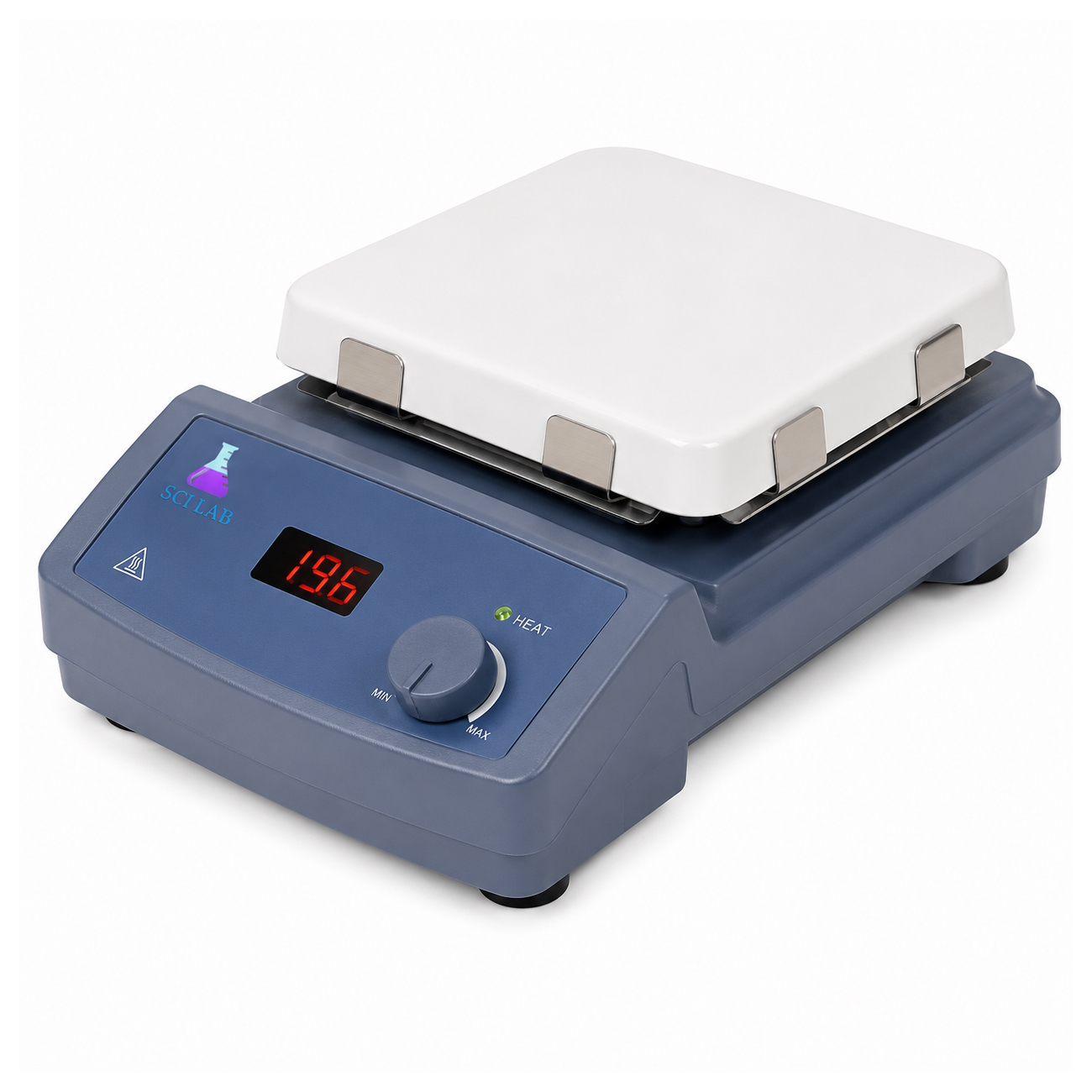
The Glass-Ceramic Heating Plate is an electric heater with a flat 175 x 175 mm glass-ceramic surface on an acid-resistant board. Rated at 700 W on a 220-240 V AC, 50/60 Hz supply, it reaches 600 °C, with the heat set on an adjustable electronic control knob. It warms beakers, flasks and water baths without an open flame.
Specifications of the Glass-Ceramic Heating Plate
| Specification | Value |
|---|---|
| Heating surface | Glass-ceramic, 175 x 175 mm |
| Board | Acid-resistant |
| Maximum temperature | 600 °C |
| Power | 700 W |
| Supply | 220-240 V AC, 50/60 Hz |
| Plug | Earthed (grounded) plug for the destination country |
| Temperature control | Adjustable, electronic, set by a knob |
| Supplied by | Science Lab Supplies, Ambala, India |
Heating Tasks in the Chemistry and Biology Lab
The plate runs on 220-240 V AC at 50 or 60 Hz and has an earthed plug, so connect it only to an earthed socket on that supply. Stand it on a stable, heat-proof bench with clear space around it, put the vessel in the centre, switch on and turn the control knob up in steps to the heat needed. Use only heat-resistant glassware with a flat base, and keep liquid in it at all times.
- Enzyme water bath: warm water in a Glass Beaker, Low Form, 500 ml to the chosen temperature, checked with Laboratory Thermometers, then stand the reaction tubes in it.
- Reducing-sugar test: stand test tubes of food solution mixed with Benedict's solution in a beaker of boiling water for a few minutes and watch for a green to brick-red colour.
- Evaporation: heat a salt solution in an open dish until crystals start to form at the edge, then lift the dish off with tongs and let the rest evaporate slowly.
The surface stays hot long after switching off and looks the same hot or cold, so warn the class and let it cool where it stands. Never heat a dry vessel or a closed or sealed container. Keep alcohol, other flammable solvents and their vapours away from the plate: it is an ordinary heater, not an explosion-proof one. Lift hot beakers with a Beaker Tong SS.
Frequently Asked Questions
Why choose a glass-ceramic top rather than a metal hot plate?
A glass-ceramic top resists acid spills and wipes clean, and the acid-resistant board adds protection. Aluminium tops spread heat more evenly but corrode when chemicals are spilt, which matters in a busy student lab.
What vessel sizes suit the 175 x 175 mm surface?
Use flat-based beakers and flasks whose base sits fully inside the surface. A base that overhangs the edge heats unevenly and can tip over. Round-bottom flasks need a heating mantle instead of a flat plate.
Can the plate run on a 110-120 V mains supply?
Not directly. It is built for 220-240 V AC, and its 50/60 Hz rating covers both mains frequencies. A plug adapter changes only the plug shape, not the voltage, so a 110-120 V supply needs a step-up transformer rated well above the plate's 700 W load.
Why should a beaker never boil dry on the plate?
Once the water has gone, the glass heats far above 100 °C and can crack or shatter, and any residue scorches or gives off fumes. Watch the level, top up with hot water and switch off before the vessel runs dry.
Why add boiling chips when heating water?
Liquid heated on a smooth glass surface can superheat and then boil suddenly, throwing hot liquid out of the beaker. A few boiling chips give bubbles a place to form, so the liquid boils smoothly.
How long does the plate stay hot after switching off?
Glass-ceramic holds heat and can stay hot enough to burn for many minutes after switching off, without looking hot. Leave it where it is, warn the class, and clean or store it only when it is cold to the touch.
Related Heating Equipment
- Magnetic Heating Stirrer: stirs and heats up to 1 l of liquid at 2000 rpm.
- Alcohol Lamp: 150 ml glass lamp with a PVC cap.
- Laboratory Spirit Burner: 100 ml metal burner with a cotton wick and a snuffing cap.
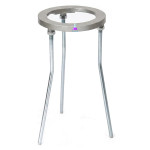
- Tripod Stand: three-legged metal stand that holds apparatus during heating.
- Wire Gauze, Non-Asbestos: non-asbestos metal gauze that supports glassware and spreads flame heat.
- Glass Beakers, Assorted Capacities: four low-form borosilicate 3.3 beakers of 50, 100, 250 and 500 ml, with pouring spouts.
This plate is listed in the Chemistry Lab range with other heaters and glassware; biology practical kits are in the Biology Lab Equipment range.
Laboratories in Nigeria, Kenya, Ghana, Ethiopia, Tanzania and Uganda can import the plate from Science Lab Supplies, an Ambala exporter holding an Importer-Exporter Code. Use the contact page to ask for a quotation, or list the plate with other heaters in the enquiry cart.
Last updated: 19 November 2026