
Glass Centrifuge Tube
.png)
Product Code : SCL-LG-11988
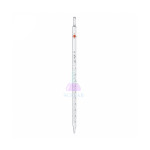
The Glass Centrifuge Tube is a 15 ml Type I borosilicate glass tube with a conical bottom and a matched cap, used to hold liquid samples and view their layers. Its printed graduations are approximate. No operating RCF, rpm or rotor adapter is rated for this tube, so it serves bench settling and sample work rather than centrifuge runs. The clear glass shows layers, sediment and colour changes.
Specifications of the Glass Centrifuge Tube
| Specification | Value |
|---|---|
| Material | Type I borosilicate glass, transparent for viewing layers and sediment |
| Capacity | 15 ml |
| Bottom | Conical |
| Size | About 17 x 120 mm (outside diameter x length) |
| Graduations | Printed, approximate |
| Closure | Matched cap |
| Function | Holding liquid samples and viewing layers and sediment |
| Centrifuge rating | None: no operating RCF, rpm or rotor adapter is rated for this tube |
| Contents | 1 centrifuge tube with its matched cap |
| Manufacturer | Science Lab Supplies, Saha, Ambala, India |
Settling and Sample Work with the Glass Centrifuge Tube
Stand the tube upright in a rack, fill it to the approximate mark needed, fit the matched cap and leave it undisturbed while solids settle into the conical tip. Then draw off the clear liquid above the sediment without tilting the tube.
- Settling a precipitate (Class 11 and 12): let a chalk or barium sulfate suspension stand in the capped tube, note the sediment level against the approximate graduations every few minutes, and compare the result with filtration through a Borosilicate Filter Funnel.
- Semi-micro salt analysis: let a small precipitate settle into the conical tip, remove the supernatant with a Glass Dropper Pipette 6 inch (150 mm) and test it for the next group of ions.
- Soil and clay suspensions: shake a little soil with water in the capped tube, stand it in a Test Tube Rack SS and watch sand, silt and clay settle in layers at different rates.
Precautions: do not spin this tube in a centrifuge, as no operating RCF, rpm or rotor adapter is rated for it. Check the glass for cracks and chips before use, keep the tube upright in a rack and avoid sudden temperature changes.
Frequently Asked Questions
How fast can a glass centrifuge tube be spun?
No speed is recommended for this tube: it has no rated operating RCF, rpm or matching rotor adapter, so it is not used for centrifuge runs. A glass tube that is spun needs a documented RCF limit and a cushioned adapter made for it, because glass breaks at far lower force than plastic.
What should be checked before ordering glass centrifuge tubes?
Check the capacity, bottom shape, outside diameter and length, the cap, and whether a maximum RCF and a matching rotor adapter are documented. This tube holds 15 ml, has a conical bottom, measures about 17 x 120 mm and has a matched cap; with no rated RCF or adapter, it is for bench work only.
Should a conical or a round-bottom tube be chosen?
A conical bottom gathers sediment into a small point, which makes it easy to see and to draw off the liquid above it. A round bottom spreads the sediment more widely but is easier to clean and carries stress more evenly. This tube has a conical bottom.
Which samples suit a borosilicate glass tube?
Most aqueous solutions, acids, salt solutions and organic solvents suit it, including solvents that soften or swell plastic tubes. Hydrofluoric acid and hot, strong alkalis attack glass, so they are kept out of it. The clear Type I borosilicate glass also lets the layers be seen easily.
How should a glass tube be checked before each use?
Hold it against the light and look for cracks, chips and deep scratches, especially at the rim and the conical tip, and set aside any damaged tube. Small flaws grow under stress and heat, so a flawed tube is replaced rather than used.
Related Tubes and Sample Glassware
- Test Tubes: bulk pack of 100 round-bottom borosilicate 3.3 tubes, 16 x 150 mm.
- Glass Test Tube, 16 x 150 mm: borosilicate tube with a rounded bottom and a fire-polished, rimless open end.
- Pipette Filler Bulb: creates suction for pipettes up to 25 ml.
- Graduated Glass Pipette, 10 mL, 0.1 mL Divisions: borosilicate 3.3 measuring pipette read in 0.1 mL divisions.
More tubes and sample vessels appear under Lab Glassware, and the Chemistry Lab section covers the wider bench apparatus for qualitative analysis.
Centrifuge tubes can be exported by Science Lab Supplies under its Importer-Exporter Code to Egypt, Iraq, Nigeria, Kenya, Ghana and Ethiopia. Use the contact page to request a quotation, or gather the tubes and a rack in the enquiry cart first.
Last updated: 26 November 2026

.jpg)
.jpg)
.jpg)
.jpg)
 (1).png)
.jpg)