Dissection Pan
Product Code : SCL-BLE-11660
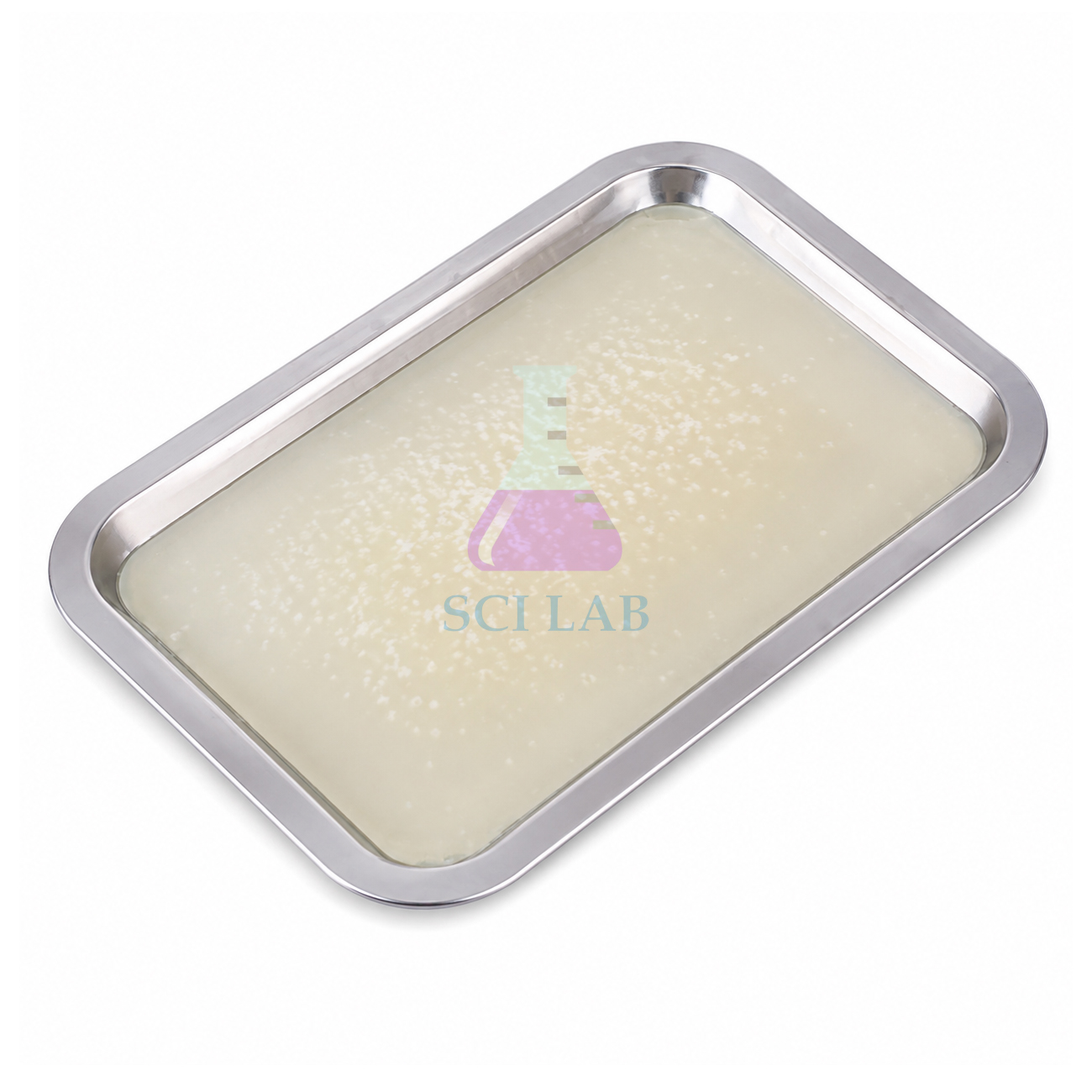
The Dissection Pan is a rectangular metal pan, 28 x 20 cm, with a layer of wax in the base. Pins pushed into the wax hold back skin and organs while a specimen is opened, and the chemical-resistant metal copes with preserving fluids and regular washing.
Specifications of the Dissection Pan
| Specification | Value |
|---|---|
| Material | Metal, chemical resistant |
| Base | Wax layer for pinning |
| Size | 28 x 20 cm (about 11 x 8 in) |
| Shape | Rectangular |
| Supplied by | Science Lab Supplies, Ambala, India |
Dissection Practicals in the Wax Pan
The specimen is rinsed, laid on the wax and opened with fine scissors. As each layer is cut, the flaps are folded back and pinned at an angle, so the organs below stay in view.
- Earthworm: pin the worm at both ends, cut along the back and pin the body wall open with Dissecting Pins to show the gut, crop and nerve cord.
- Cockroach or fish: use the scissors and forceps from a Student Dissecting Set to expose the digestive system, then draw and label it.
- Flower parts: lay out sepals, petals, stamens and carpels in rows on the wax and examine them with a 2x Hand Magnifier.
Precautions: cut away from yourself and your neighbour, keep the specimen damp rather than flooded, and wash hands after the practical.
Frequently Asked Questions
Will the wax need replacing after many classes?
Rarely. Pin holes and knife marks build up, but the wax can be levelled by warming the pan gently in a low oven until the surface melts, then letting it set flat. Only wax that has cracked away needs topping up.
Metal pan or wooden board: which suits a school dissection lab?
A metal pan with wax holds fluids inside its sides, can be washed and disinfected, and does not soak up preserving fluid. A wooden board is lighter and takes pins directly, but it absorbs liquids and is harder to keep clean.
What size of specimen fits a 28 x 20 cm pan?
It suits the usual school and college material: earthworms, cockroaches, small fish, flowers, and organs such as a sheep heart or kidney. Larger animals fill the pan and are easier to work on in a bigger tray.
Why are pins used to hold back the flaps rather than the whole specimen?
The aim is to keep cut skin and muscle folded out of the way so the organs stay visible. Pinning through organs damages what you are trying to see. Angle each pin away from the cut so it does not get in the way of the scissors.
How should waste from the pan be disposed of?
Lift tissue off the wax with forceps into a plastic bag, double-bag it and follow the school and local rules for biological waste. Never wash pieces down the sink. Then rinse the pan and let it dry before storing.
Related Dissection Trays and Instruments
- Dissecting Tray with Wax: aluminium tray with wax, 300 x 200 x 45 mm.
- Dissecting Tray: sheet tray with angular sides, in G.I. or aluminium, with or without a wax layer.
- Dissecting Dishes: rectangular stainless-steel dishes with flanged edges, from 200 x 150 mm.
- Dissecting Board: soft wood board with raised edges, 550 x 400 or 450 x 300 mm.
- Dissection Kit: 18 instruments in a plastic box, including a magnifier and a watch glass.
- Junior Dissecting Microscope: high-eyepoint lenses on a jointed arm with a plano-concave mirror.
More practical items are on the Biology Lab Equipment page, and instruments are grouped under Dissecting and Surgical.
Science Lab Supplies can ship dissection pans to Nigeria, Kenya, Ghana, Ethiopia, Tanzania and Uganda, using its Importer-Exporter Code. To have a quotation prepared, send the details through the contact page or the enquiry cart.
Last updated: 15 November 2026