
Crime Scene Tape
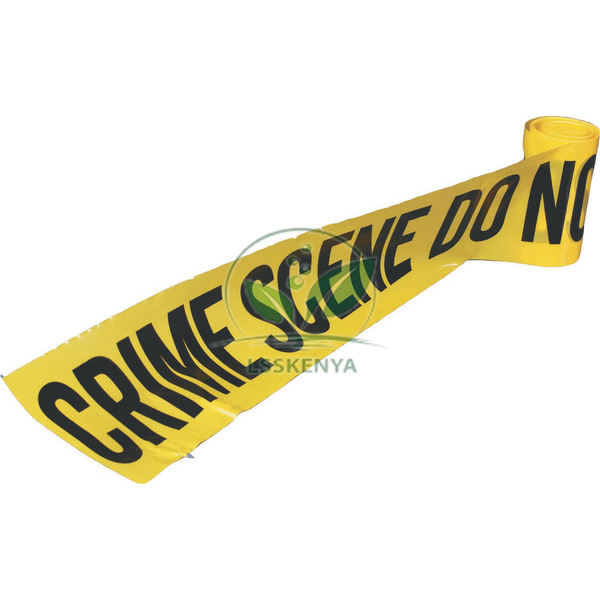
Product Code : LSK-CL-10256
This Crime Scene Tape is a bright yellow barrier tape for forensic science lessons. Teachers use it to mark off a mock crime scene in a classroom, lab or corridor, so students learn to secure an area before evidence is recorded and collected. Each roll is 30 m long.
Specifications of the Crime Scene Tape
| Specification | Value |
|---|---|
| Colour | Bright yellow |
| Roll length | 30 m (about 98 ft) |
| Use | Forensics crime scene lessons |
| Supplied by | Science Lab Supplies, Ambala, India |
Setting Up a Mock Crime Scene
Run the tape between chairs, doors or stands to form a clear perimeter with one entry point. Only the team assigned to the scene crosses the tape, and each entry is logged.
- Scene roles: give students the jobs of photographer, measurer, note-taker and evidence collector, and rotate them between scenes.
- Evidence collection: pick up glass, fibres and hairs with Forceps and look at them closely with a Hand Lens with White Plastic Handle.
- Packaging: place each item in its own labelled Petri Dish for comparison with known samples back in the lab.
Frequently Asked Questions
Why tape off a scene before collecting evidence?
The perimeter keeps out people who could move, add or destroy evidence. In a lesson it teaches students that a scene is secured first, before any photographs, measurements or samples are taken.
How large should the taped area be?
Make it wider than the visible evidence, because traces such as glass fragments or fibres often spread further than expected. Shrinking a large perimeter is easier than enlarging a small one.
Can the tape be used again?
Yes, if it is rolled up carefully after the lesson. Untie it rather than cutting it where possible, so longer lengths stay usable for the next activity.
What roles do students take at a mock scene?
Common roles are photographer, measurer, sketcher or note-taker, evidence collector and evidence labeller. Each records what was done, so the chain of custody can be shown later.
How can contamination be avoided?
Wear gloves, enter by one route only, handle items with forceps, and package and label each item separately. Keep a log of who crosses the tape and when.
What is the difference between an outer and an inner cordon?
The outer cordon runs around the whole scene and keeps onlookers out. An inner cordon tapes off a smaller area around key evidence, so only the students processing it may enter. Both can be marked with the same tape.
Related Forensic Science Activities
- Physical Properties of Glass: activity with a teachers manual and student guide on the properties of glass as evidence.
- Fabrics Sample Pack: swatches of different fabrics, each a different colour, with a key card.
- Forensics Enzymology: a head-on car collision case in which students work with blood and urine samples.
- Forensics Antigen Detection: students test a detective's hypothesis using a trail of blood.
- Tripod Magnifier: 10X plano-convex lens in a frame with three metal legs.
Browse the Biology Lab range, where the forensic activity items are grouped.
Science Lab Supplies holds an Importer-Exporter Code and can ship to buyers in Tanzania, Uganda, the UAE, Saudi Arabia, Oman and the Philippines. For a quotation, use the contact page or the enquiry cart.
Last updated: 15 November 2026


