Volume Measuring Cylinder
Product Code : SCL-CL-11908
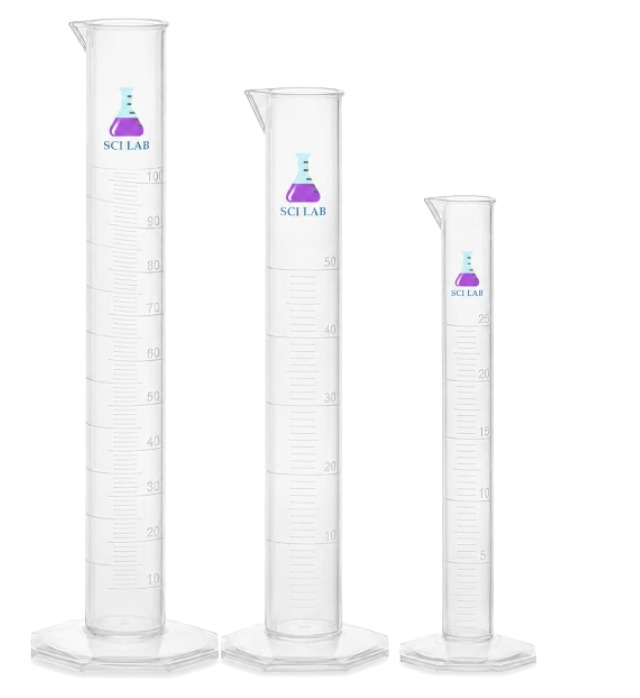
The Volume Measuring Cylinder is a transparent plastic cylinder for measuring liquid volumes in practical work. It comes in 10, 50 and 100 ml sizes, and the chemical-resistant plastic is less likely than glass to break if it is knocked over.
Specifications of the Measuring Cylinder
| Specification | Value |
|---|---|
| Material | Transparent chemical-resistant plastic |
| Capacities | 10 ml, 50 ml, 100 ml |
| Purpose | Measuring liquid volumes |
| Supplied by | Science Lab Supplies, Ambala, India |
Measuring Volumes in Class Practicals
Stand the cylinder on a level bench, pour to near the volume and add the last part with a dropper. Read the bottom of the meniscus with your eye level with it.
- Measuring reagents: measure water or a solution and pour it into a 50 ml Glass Beaker for the reaction.
- Density of a liquid: weigh the empty cylinder on an Electronic Balance, add 50 ml of liquid and weigh again.
- Volume of a small solid by displacement: note the water level, slide the object in and read the new level.
Keep plastic cylinders away from hot liquids and flames.
Frequently Asked Questions
Can hot liquids be measured in a plastic cylinder?
Let them cool to room temperature first. Plastic softens with heat, and a hot liquid also gives a false volume because it shrinks as it cools. Keep the cylinder away from flames and hot plates.
Should I hold the cylinder up to read it?
No. Stand it on a flat bench and bend down until your eye is level with the liquid. A tilted cylinder held in the hand gives a different reading each time.
How should plastic cylinders be cleaned?
Wash them with warm water, a mild detergent and a soft sponge or brush, then rinse with distilled water. Scouring pads and powders scratch plastic, which clouds the wall and makes the scale harder to read.
Will solvents damage a plastic cylinder?
Some can. Water, dilute acids and most salt solutions do no harm, but certain organic solvents soften, swell or cloud some plastics. Check what the plastic resists before measuring anything other than water-based solutions.
Why do drops cling to the inside wall?
Water does not spread evenly over some plastics, so drops stay on the wall. Pour slowly and let the cylinder drain for a few seconds before you read it.
Related Measuring Cylinders and Volume Tools
- Measuring Cylinder 10ml: glass cylinder graduated in 0.2 ml steps.
- Measuring Cylinder 500ml: 500 ml glass cylinder graduated every 5 ml.
- Graduated Pipette, 10 ml: graduated clear glass pipette, 10 ml.
- Plastic Wash Bottle, 500 ml: 500 ml squeeze bottle with a sealable screw top.
Browse the Chemistry Lab range or the full School Lab Equipments section.
Plastic measuring cylinders can go to the UAE, Saudi Arabia, Oman, the Philippines, Nepal and Bangladesh on export orders, which Science Lab Supplies handles with its Importer-Exporter Code. Quotations for the cylinders are sent after a request on the contact page or through the enquiry cart.
Last updated: 15 November 2026
.jpg)