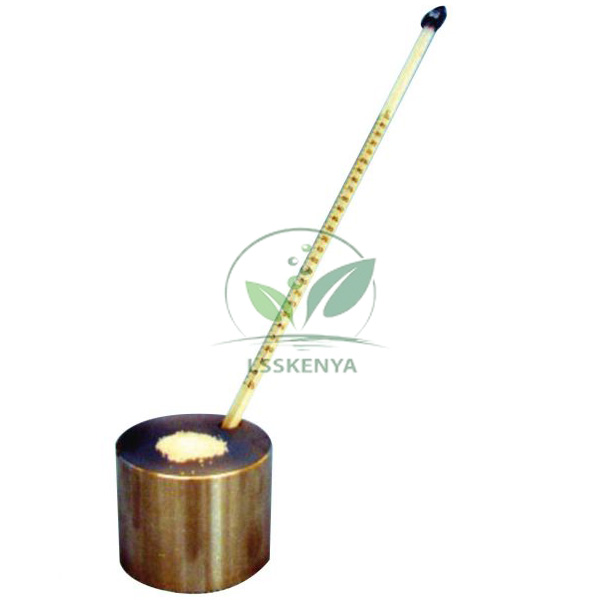
Simple Melting Point Apparatus, Aluminium Block
Product Code : LSK-CL-10268
The Simple Melting Point Apparatus is a solid aluminium block, 65 mm across and 50 mm high, with an angled hole drilled to take a thermometer. The block spreads heat evenly so a small sample warms at the same rate as the thermometer bulb. The thermometer is not included.
Specifications of the Melting Point Block
| Specification | Value |
|---|---|
| Block material | Aluminium |
| Dimensions (diameter x height) | 65 x 50 mm |
| Thermometer hole | Angled, drilled into the block |
| Thermometer | Not included |
| Supplied by | Science Lab Supplies, Ambala, India |
Finding Melting Points with the Aluminium Block
Set the block on a tripod and gauze and push a thermometer into the angled hole. Heat gently with a small flame, put a few crystals or a packed capillary of the sample in close contact with the block, and note the temperature when melting starts and ends.
- Melting point of a known solid: heat with a Laboratory Spirit Burner and compare the reading with the book value.
- Purity check: test a pure sample and the same sample mixed with a little impurity, and compare the melting ranges.
- Temperature readings: read a Thermometer (with no Mercury) at eye level, and repeat each run for a mean value.
Common errors: heating too fast near the melting point, a damp or coarse sample, and a thermometer bulb that is not fully seated in the hole.
Frequently Asked Questions
What does the melting point tell us about a solid?
A pure solid melts sharply over a narrow range. Impurities lower the melting point and spread it over several degrees, so the reading is a quick purity check.
Why must heating be slow near the melting point?
The block, thermometer and sample need time to reach the same temperature. Fast heating makes the thermometer lag behind, so the recorded value comes out too high or the range too wide.
How should the sample be prepared?
It should be dry and finely powdered. Pack a short column into a capillary by tapping, with no air gaps, so heat reaches all of it evenly.
Which thermometer suits the block?
Choose a glass thermometer that fits the angled hole and covers the melting points you test. Many school samples melt below 120 °C, but some need a higher range.
Why can two students get different readings for the same sample?
They may heat at different rates, judge the first sign of melting differently, or use thermometers that read slightly apart. Check each thermometer with a pure substance of known melting point and agree what counts as the start and end of melting.
Related Melting Point and Heating Apparatus
- Melting Point Apparatus, Block Type, 350 C: electric block with rapid heat switch and back-lit, magnified sample tubes.
- Laboratory Thermometers: glass alcohol thermometer, -10 to 100 °C.
- Tripod Stand: three-legged metal stand for holding apparatus over a flame.
- Wire Gauze: non-asbestos metal gauze that spreads the heat of a flame.
- Crucible Tongs: metal scissor-type tongs with a 4 cm jaw opening.
Browse the Chemistry Lab range or go back to School Lab Equipments.
Science Lab Supplies has an Importer-Exporter Code and ships to buyers in Sri Lanka, Vietnam, Malaysia, Peru, Egypt and Iraq. For a quotation, send a request from the contact page or add the item to the enquiry cart.
Last updated: 15 November 2026