
Self-Regulating Siphon
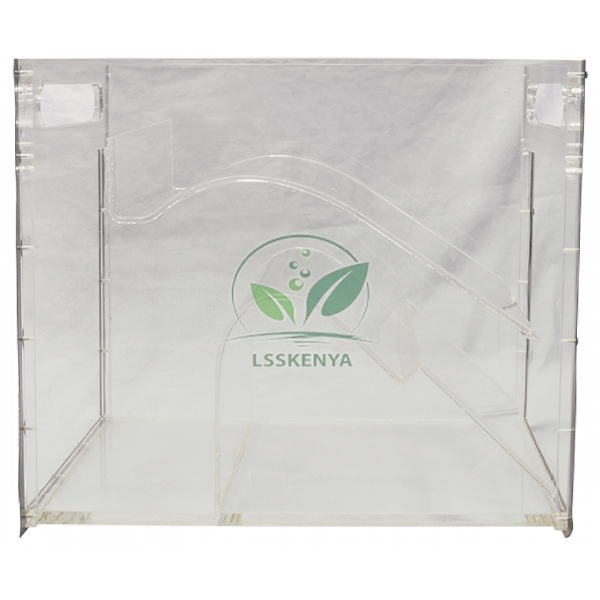
Product Code : LSK-FM-10442
Self-Regulating Siphon (SKU LSK-FM-10442) is a clear acrylic hydraulic model that shows a siphon automatically adjusting its discharge over a wide range while the water level upstream stays mostly constant. Because the siphon passes a mixture of air and water, students can watch it regulate itself. It suits open channel and hydraulic structures practicals for engineering students. Science Lab Supplies manufactures the acrylic siphon in its Saha, Ambala factory, Plot 448, HSIIDC Industrial Area, India, and handles quotations for colleges, contractors and distributors there.
Specifications
Each specification of the acrylic siphon is set out on its own row below. In short, it is a self-regulating siphon made from clear acrylic, so the air and water mixture passing through it is visible, and its discharge adjusts automatically over a wide range while the upstream water level remains mostly constant.
| Specification | Value |
|---|---|
| SKU | LSK-FM-10442 |
| Type | Self-regulating siphon model |
| Material | Clear acrylic |
| Flow through siphon | Mixture of air and water |
| Discharge | Adjusts automatically over a wide range |
| Upstream water level | Maintained mostly constant |
| Manufacturer | Science Lab Supplies, Saha, Ambala, Haryana |
| Country of origin | India |
Applications and Experiments for the Self-Regulating Siphon
Students vary the flow reaching the siphon and record the discharge and the upstream level, showing that the level barely moves while discharge follows the supply. The model explains the principle of siphon spillways that hold reservoir and canal levels close to constant across a wide range of flows.
- B.Tech / B.E. civil engineering: siphon spillways and automatic level control.
- Recording discharge against upstream head, then contrasting it with the head-discharge behaviour of an orifice on the Flow Through an Orifice apparatus.
- Diploma irrigation courses: self-regulating level control compared with weir regulation on the Discharge Over a Notch apparatus.
Standard Scope of Supply
The Self-Regulating Siphon is supplied as a single unit as described above, made in clear acrylic. The flow channel or water supply it is tested with is a separate item, and any optional accessories you need are listed on the quotation for confirmation.
Packing, MOQ and Lead Time
A quotation is available for one siphon or for a set of open channel models, stating the packing, delivery time and price for your quantity. Other fluid mechanics lab experiments from the same range can share the quotation.
As a registered exporter with an Importer-Exporter Code, Science Lab Supplies is able to ship to buyers in South Africa, Qatar, Sri Lanka, Vietnam, Malaysia and Peru. Ask about this siphon, or a full set of channel models, through the contact page; the enquiry cart keeps a running list, and procurement officers can turn to the lab tender page.
Frequently Asked Questions
What does a self-regulating siphon do?
It passes a mixture of air and water and automatically adjusts its discharge over a wide range, while the water level upstream stays mostly constant, so students can relate flow changes to a steady head.
Why is the model made of clear acrylic?
Clear acrylic lets students see the air and water mixture inside the siphon and follow how the flow pattern changes as discharge rises or falls.
Is Science Lab Supplies the manufacturer or a trader?
The clear acrylic siphon is made by Science Lab Supplies itself, at its manufacturing site in Saha, Ambala, India, and the company quotes it directly to each buyer.
Can it be ordered with other channel models?
Yes. Gates, weirs, spillways and culverts from the same range can be listed together for a single quotation and consignment, with packing set for the full list.
Related Hydraulic Structure Models
These Fluid Mechanics models show other ways water levels and flows are controlled in channels, under bridges and at dams, so they make a natural sequence with the siphon experiment in an open channel course and can be quoted together.
- Spillway — four-part model with a detachable ski jump.
- Culvert — open and orifice flow observed and calculated.
- Radial Sector Gate — discharge characteristics of a radial gate.
- Notched Weirs — flow and head over rectangular and V notches.
- Sluice Gate with Tappings — ten pressure tappings on the gate face.
- Bridge Piers — streamline curvature and faster flow between piers.
Browse the full Fluid Mechanics range, the Hydraulics and Pneumatics range, or all engineering laboratory equipment.
Last updated: 22 October 2026


