3-4 Thread Overlock Machine
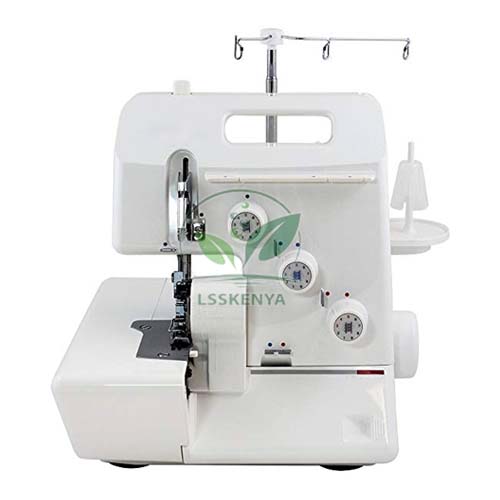
Product Code : LSK-TT-10556
3-4 Thread Overlock Machine (SKU LSK-TT-10556) is an overlocker, or serger, that trims the fabric edge and overcasts it with three or four threads in one pass, giving a neat, stretch-friendly seam. Sewing and garment making classes use it alongside lockstitch machines. Science Lab Supplies supplies this machine from Ambala, India to training institutes, fashion schools, tender contractors and distributors.
Specifications
This compact, lightweight overlocker has differential feed, adjustable presser foot pressure, a retractable knife, a four-colour threading guide and LED lighting. Stitch length is 0.8–4.0 mm and top speed is 1300 stitches per minute; it takes standard sewing machine needles and has a carrying handle.
| Parameter | Value |
|---|---|
| SKU | LSK-TT-10556 |
| Stitches | 3 or 4 thread, cut and sew overlock |
| Stitch length | 0.8–4.0 mm |
| Stitch width | 3.0–7.0 mm (feature list quotes 5.0–7.0 mm) |
| Maximum sewing speed | 1300 spm |
| Feed | Differential feed |
| Stitch selection | Dial |
| Lighting | LED |
| Other features | Retractable knife, free arm / flatbed, lower looper threading system, thread twist protection, needle plate separation, trim trap |
| Supplied by | Science Lab Supplies, Ambala, India |
Applications and Experiments for the 3-4 Thread Overlock Machine
Students use the overlocker to finish raw seam allowances, sew knit seams and prepare hems, and adjusting the differential feed shows how to stop stretch or waviness on different fabrics. It suits tailoring, dress making and fashion courses and is standard vocational training equipment in garment workshops.
- ITI Sewing Technology and Dress Making trades: seam finishing and overlocking practice.
- Fashion design diplomas: finishing samples on woven and knit fabrics.
- TVET garment production modules: combining lockstitch and overlock operations.
- Blind hemming with the blind stitch foot in one operation.
Standard Scope of Supply
Each machine is listed with standard presser feet, a common snap-on presser foot, a blind stitch foot, a foot controller, a toolkit, a dust cover and an instructional DVD, plus built-in accessory storage and a trim trap that also stores the foot controller.
Packing, MOQ and Lead Time
Order one overlocker for a demonstration bench or a batch for a full sewing room. We quote packing, delivery time and price for the number you need, and lockstitch or finishing machines can be added so the workshop is priced as one list.
Science Lab Supplies holds an Importer-Exporter Code and can ship to buyers in Malaysia, Peru, Egypt, Iraq, Nigeria and Kenya. Science Lab Supplies is registered for GST (GSTIN 06ADEPJ0574F2ZU). To enquire, visit the contact page, add models to the enquiry cart, or refer to the lab tender page for tender orders.
Frequently Asked Questions
What is the difference between 3-thread and 4-thread overlock?
A 3-thread stitch gives a lighter edge finish, while the 4-thread stitch adds a second needle line for a stronger seam; this machine sews both.
What accessories come with the machine?
The listing includes standard and snap-on presser feet, a blind stitch foot, foot controller, toolkit, dust cover and instructional DVD.
Does it need special needles?
No. It uses standard sewing machine needles, which keeps consumables simple for a training workshop.
Who supplies the 3-4 Thread Overlock Machine?
Science Lab Supplies supplies it from Ambala, India, and quotes it with lockstitch, buttonhole and finishing machines for garment training rooms and tenders.
Related Sewing Machines
Overlocking finishes seams that other machines sew. These four items complete the sewing and finishing stations of a garment training room, so the full set of machines can be compared and ordered together.
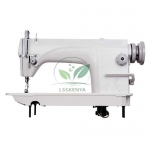
- Single Needle Lockstitch Machine — main seam-sewing machine.
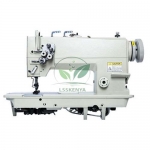
- Double Needle Lockstitch Machine — parallel twin-needle seams.
- Sewing Machine — general sewing station.
- Thread Sucking Machine — removes thread ends after overlocking.
Browse the full Textile Technology range or all TVET lab equipment.
Last updated: 25 September 2026