Spoon for Burning
Product Code : SCL-CL-11551
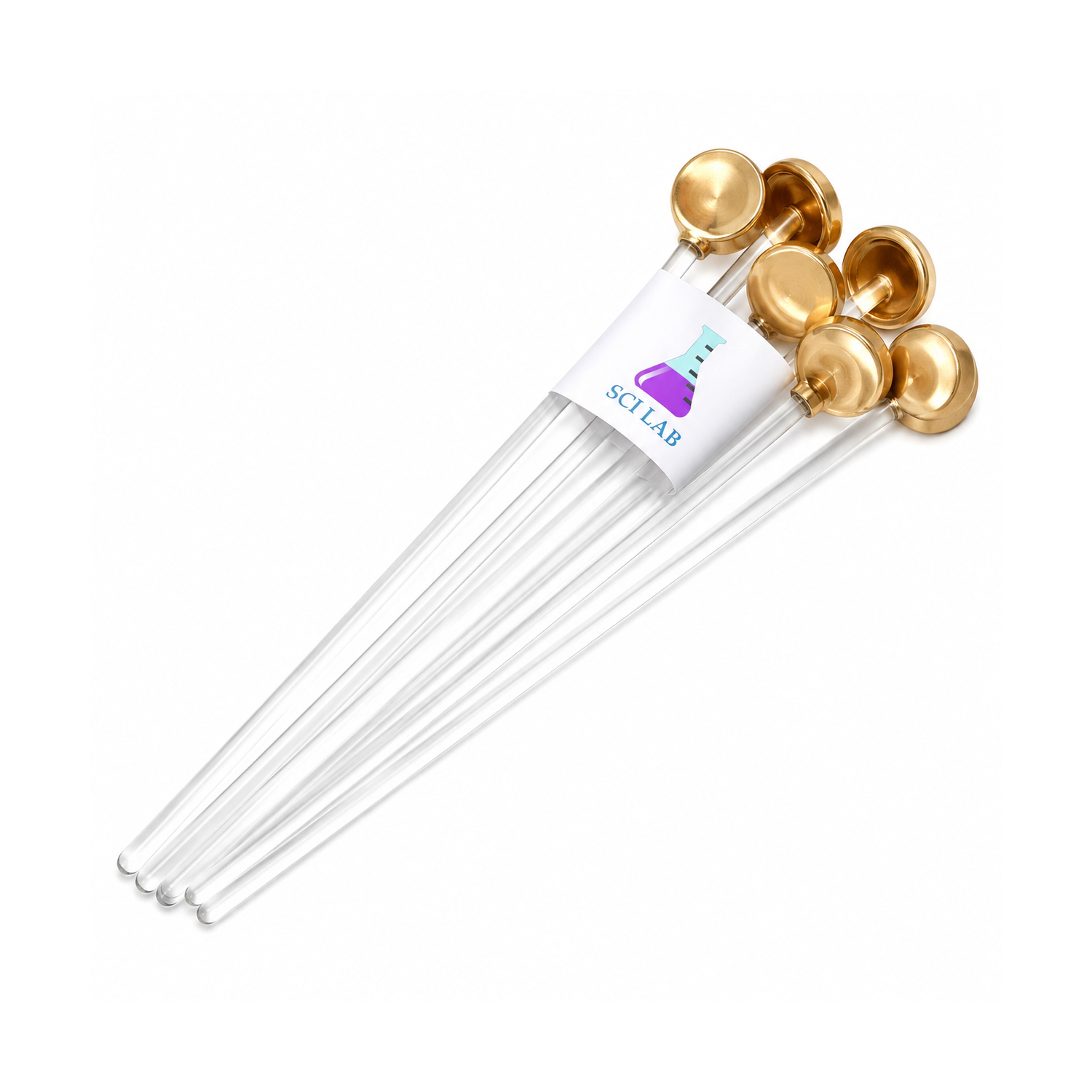
Spoon for Burning (SKU SCL-CL-11551) is a small hemispherical spoon on a long wire handle, used to hold a sample of a solid in a flame or lower a burning substance into a gas jar. Often called a combustion or deflagrating spoon, it appears in school chemistry practicals on oxygen, combustion and oxides. Science Lab Supplies supplies it from Ambala, India, to schools, colleges, training institutes, tender contractors and distributors, together with other school chemistry lab equipment.
Specifications
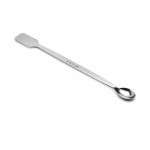
The spoon has a hemisphere-shaped bowl fixed to the end of a wire, so the sample can be held in a flame or inside a jar while the hand stays well away from the heat. It is a general laboratory item; exact wire length and bowl size for your order are confirmed on the quotation.
| Parameter | Value |
|---|---|
| SKU | SCL-CL-11551 |
| Also known as | Combustion spoon, deflagrating spoon |
| Bowl | Hemispherical |
| Handle | Wire |
| Dimensions | Confirmed on the quotation |
| Use | Laboratory combustion experiments |
| Supplied by | Science Lab Supplies, Ambala, India |
Applications and Experiments for the Spoon for Burning
The spoon is used to burn small amounts of an element or compound, either in a burner flame or inside a jar of gas, and to observe the flame, the product and its effect on indicators. These combustion experiments are part of middle-school and secondary chemistry across most syllabuses.
- Class 7–8 science: burning substances to study combustion and the need for air.
- Class 9–10 chemistry: burning sulphur or carbon in oxygen and testing the oxide formed with litmus.
- Teacher demonstrations: showing that substances burn more brightly in oxygen than in air.
Burning sulphur and similar substances gives off irritating, toxic fumes, and some metals burn with a very bright flame. Carry out these experiments only under teacher supervision, in a fume cupboard or well-ventilated room, and let the spoon cool before handling the bowl.
Standard Scope of Supply
The Spoon for Burning is supplied as a single spoon with its wire handle, as described above. Gas jars, a cover or cap and the chemicals to be burned are separate items and are not included; add them to the enquiry if required.
Packing, MOQ and Lead Time
Spoons can be quoted for a single demonstration or for every group in a class. The quotation gives packing, delivery time and price for the number you request, and gas jars or a burner can be listed on the same quotation.
With its Importer-Exporter Code, Science Lab Supplies is able to ship to buyers in Kenya, Ghana, Ethiopia, Tanzania, Uganda and the UAE. Enquire from the contact page, place the spoon in the enquiry cart, or refer to the lab tender page for school tenders.
Frequently Asked Questions
What is a spoon for burning used for?
It holds a small amount of a solid in a flame or inside a gas jar so that its combustion can be observed safely from a distance.
What are the wire length and bowl size?
Please ask through the contact page; the quotation will state the exact dimensions of the spoon offered for your order.
Who supplies the Spoon for Burning?
It is supplied by Science Lab Supplies from Ambala, India, and quoted directly to schools, colleges, dealers and tender contractors.
Are combustion experiments safe for students?
Only with supervision and good ventilation, because many burning substances release harmful fumes. Use small amounts and keep the spoon pointed away from people.
Related Combustion Equipment
Combustion practicals need a heat source and a spoon matched to the gas jar being used. The four Chemistry Lab items below include alternative deflagrating spoons, one with a cap for sealing the jar, a burner and a spoon for measuring out solids, all quotable with this spoon.
- Deflagrating Spoon — alternative spoon for gas-jar combustion.
- Deflagrating Spoon and Cap — spoon with a cap to close the jar.
- Beck Bunsen — burner for igniting the sample.
- Spoon for Substances — steel spoon for measuring out solids.
Browse the full Chemistry Lab range or all school lab equipment.
Last updated: 25 September 2026