Resistance Dependence Apparatus
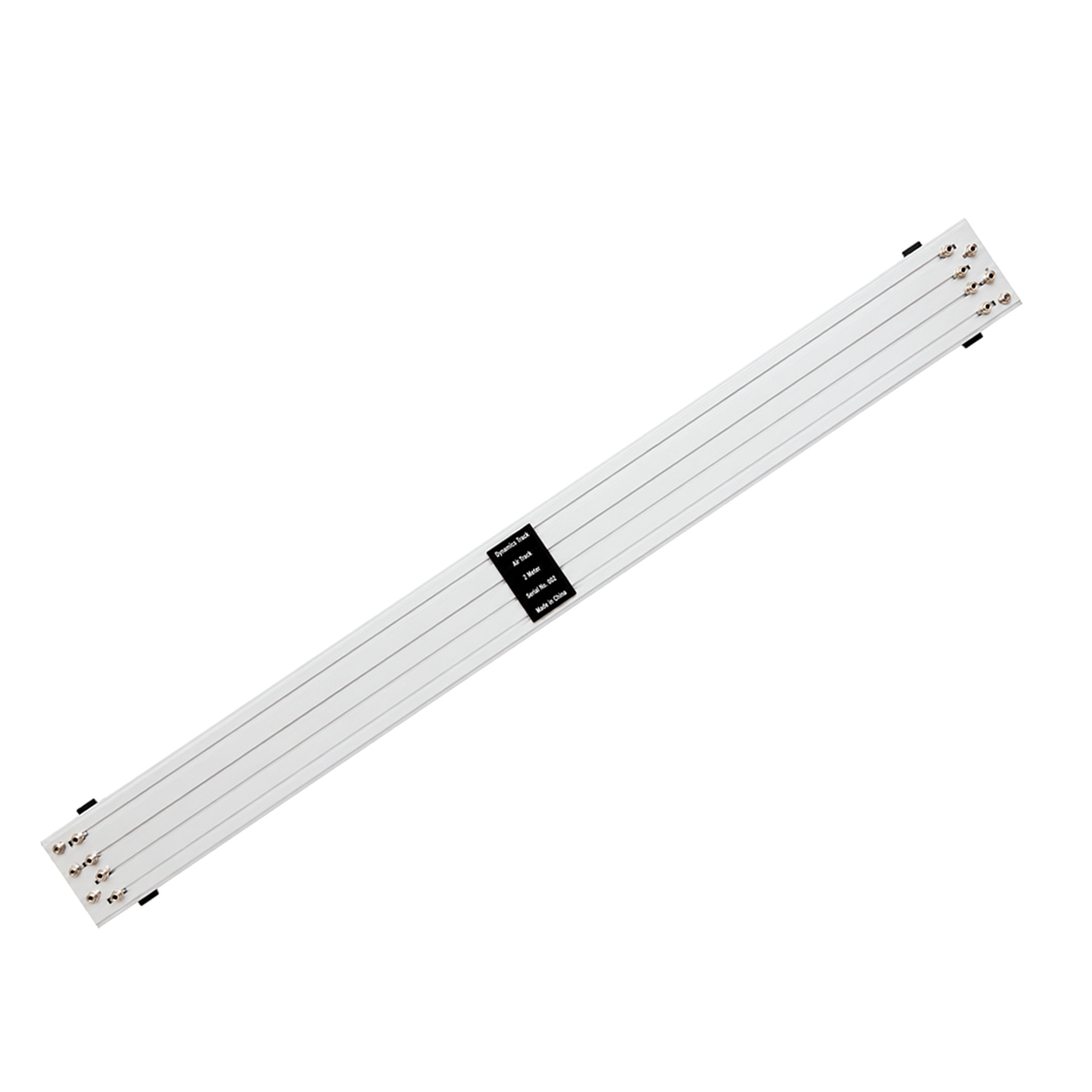
Product Code : SCL-PL-12368
Resistance Dependence Apparatus (SKU SCL-PL-12368) is a 1 m wire board for studying how the electrical resistance of a conductor depends on its length, cross-section and material. It serves Class 10 and Class 12 current-electricity practicals and first-year college physics labs. Science Lab Supplies builds the apparatus in its own factory at Plot 448, HSIIDC Industrial Area, Saha, Ambala, India, and sells it directly to schools, colleges, distributors and tender contractors.
Specifications
The board carries several 1 m conductors: constantan wires of different diameters, including two identical Ø0.7 mm wires, plus a brass wire of Ø0.5 mm. Each conductor ends in 4 mm sockets, and the apparatus is intended for extra-low-voltage use only, fed from a low-voltage laboratory supply.
| Parameter | Value |
|---|---|
| SKU | SCL-PL-12368 |
| Constantan conductors | Two wires Ø0.7 mm; wires Ø1.0 mm, Ø0.5 mm and Ø0.35 mm |
| Brass conductor | Ø0.5 mm |
| Conductor length | 1 m |
| Connections | 4 mm sockets |
| Supply | Extra-low voltage only |
| Manufacturer | Science Lab Supplies, Saha, Ambala, Haryana |
| Country of origin | India |
Applications and Experiments for the Resistance Dependence Apparatus
Students pass a small current through one conductor at a time, read voltage and current, and calculate resistance. Comparing wires of equal length but different diameter, or equal diameter but different metal, turns the factors in R = ρL/A into measurements. It is a standard entry on a physics lab equipment list for Class 11 and 12.
- Class 10 science: factors on which the resistance of a conductor depends.
- Class 12 physics: resistance and resistivity, and finding the resistivity of a wire.
- Material comparison: constantan and brass wires of the same Ø0.5 mm diameter.
Standard Scope of Supply
Each apparatus carries the constantan wires of Ø0.7 mm (two), Ø1.0 mm, Ø0.5 mm and Ø0.35 mm and the Ø0.5 mm brass wire, all 1 m long with 4 mm sockets. Not included: the low-voltage power supply, meters and connecting leads, which can be quoted separately.
Packing, MOQ and Lead Time
You may ask for a price on a single apparatus or on enough for a whole practical batch. The Science Lab Supplies quotation lists the packing, the delivery time and the price for the number you give, and meters can be added.
Science Lab Supplies has an Importer-Exporter Code and, as a registered exporter, can ship to buyers in Tanzania, Uganda, the UAE, Saudi Arabia, Oman and the Philippines. The business is registered under Udyam as a manufacturing enterprise (UDYAM-HR-01-0014546) and for GST (GSTIN 06ADEPJ0574F2ZU). Send your list via the contact page or the enquiry cart; tender buyers can start at the lab tender page.
Frequently Asked Questions
Why are there two 0.7 mm constantan wires?
Two identical wires let students double the effective length by joining them in series, or double the cross-section by joining them in parallel, and then check how the measured resistance changes in each case.
What voltage should be used with this apparatus?
Only extra-low voltage. Use a low-voltage laboratory power supply, keep the current small so the wires do not heat up, and work under teacher supervision.
Does Science Lab Supplies make this apparatus itself?
Yes. Science Lab Supplies is a manufacturer, not a trading house: the wire board is assembled at its factory in Saha, Ambala, India, and every quotation for it is issued by the factory.
Can it be quoted with an electricity and magnetism lab kit for schools?
Yes. The apparatus can go on one quotation with the power supply, meters and other electricity items that your school list or tender specification names, so the whole practical is priced together.
Related Current Electricity Apparatus
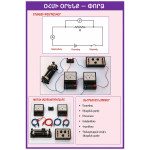
Measuring resistance needs a steady supply and two meters, and some labs want a second design for the same topic. These four items complete the resistance-dependence practical on a school or college electricity bench and can all be listed on one quotation.
- Apparatus for Studying the Dependence of Electrical Resistance on the Factors that Determine it — an alternative design.
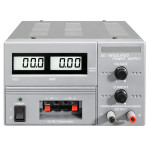
- AC/DC Laboratory Power Supply — stepped DC output from 1 to 15 V.
- Voltmeter — reads the voltage across each wire.
- Ammeter — reads the current through the wire under test.
Browse the full Physics Lab range or all physics lab equipment.
Last updated: 25 September 2026