Pair of Metal Balls
Product Code : SCL-PL-12407
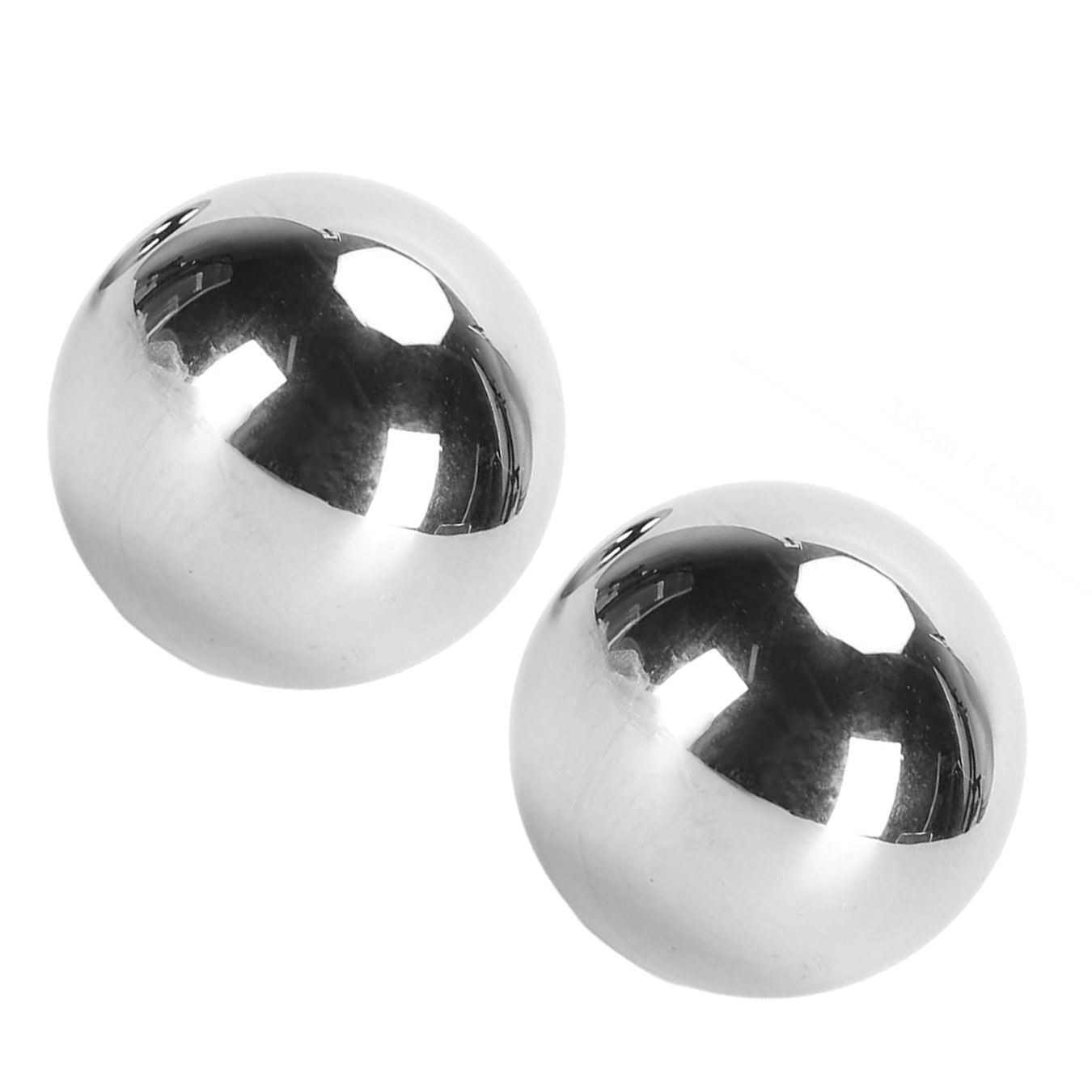
Pair of Metal Balls (SKU SCL-PL-12407) is two bright steel spheres, each 2 cm in diameter, with a corrosion-resistant finish. The balls can serve as measurement samples for vernier calipers and micrometers and as simple bodies for rolling, falling and collision experiments in school and college mechanics. Science Lab Supplies manufactures the pair at its works at Plot 448, HSIIDC Industrial Area, Saha, Ambala, India, and quotes schools, colleges, tender contractors and distributors without middlemen.
Specifications
Both spheres are bright steel with a diameter of 2 cm (20 mm), and their corrosion-resistant finish keeps the surface clean through repeated handling and measurement. Having two matching balls lets students compare readings, repeat timings or set up simple two-body collisions on the bench.
| Parameter | Value |
|---|---|
| SKU | SCL-PL-12407 |
| Quantity | 2 balls (pair) |
| Material | Bright steel |
| Diameter | 2 cm (20 mm) |
| Finish | Corrosion resistant |
| Manufacturer | Science Lab Supplies, Saha, Ambala, Haryana |
| Country of origin | India |
Applications and Experiments for the Metal Balls
A 2 cm steel sphere is a convenient standard object for the physics lab. Students can measure its diameter with a vernier caliper or micrometer and calculate its volume, roll it down an incline to study acceleration, drop it to time free fall, or collide the two balls to discuss momentum.
- Class 11 physics practical (NCERT): measuring the diameter of a small sphere with a vernier caliper and finding its volume.
- Class 11 physics: rolling on an inclined plane and free-fall timing.
- Class 9 science and Class 11 physics: collisions and conservation of momentum.
Standard Scope of Supply
The item is a pair of bright steel balls, each 2 cm in diameter, supplied as described above. Measuring instruments, inclined planes and timing devices are separate items, and they can be quoted together with the balls to build a complete measurement or mechanics bench.
Packing, MOQ and Lead Time
A quotation can be requested for one pair or for a pair per student group, and Science Lab Supplies sets out the packing, delivery time and price for that quantity. Vernier calipers, micrometers and other mechanics lab equipment in India can be added to the same quotation.
With an Importer-Exporter Code in place, Science Lab Supplies can ship to buyers in Iraq, Nigeria, Kenya, Ghana, Ethiopia and Tanzania. Send questions through the contact page, combine products in the enquiry cart, or read the lab tender page before a tender submission.
Frequently Asked Questions
What size and material are the metal balls?
Each ball is bright steel, 2 cm (20 mm) in diameter, with a corrosion-resistant finish. The pair gives two matching spheres for measurement and mechanics experiments in school and college labs.
Can the balls be used for the vernier caliper practical?
Yes. A 2 cm sphere suits the Class 11 practical of measuring the diameter of a small spherical body with a vernier caliper, and the diameter can then be used to calculate the sphere's volume.
Is Science Lab Supplies the manufacturer or a trader?
Science Lab Supplies is the manufacturer. The pair of balls comes from its own factory in Saha, Ambala, Haryana, India, and quotations are issued directly by the company that makes them.
Can the metal balls be quoted for a tender?
Yes. Send the required number of pairs and your tender specification through the contact page, and the quotation will list packing, delivery time and price for that quantity.
Related Measurement and Mechanics Apparatus
The metal balls serve both measurement and motion experiments, and the items below support each use. A vernier caliper and a micrometer measure the diameter, a free-fall apparatus times a dropped body, and a Newton's cradle shows momentum transfer between spheres. All four can go on one quotation.
- Caliper Vernier — measuring the ball diameter.
- Micrometer — screw-gauge measurement of diameter.
- Apparatus for Demonstrating the Free Fall of Bodies — free-fall experiments.
- Newton's Cradle — momentum transfer demonstration.
Browse the full Physics Lab range or all physics lab equipment.
Last updated: 25 September 2026