
Ferrite Discs
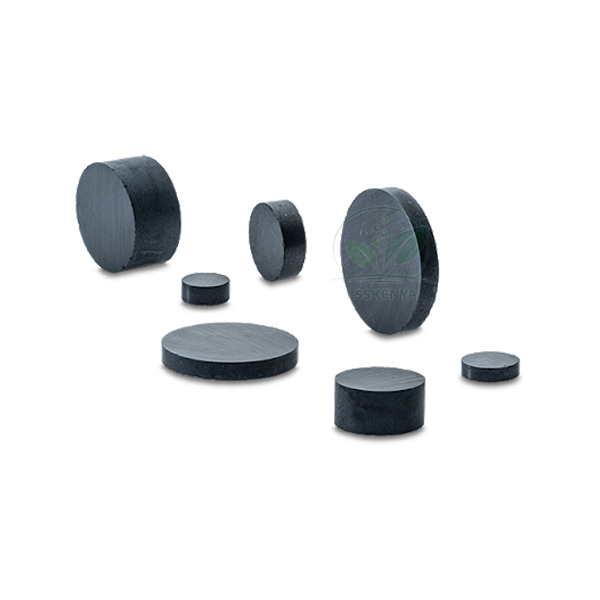
Product Code : LSK-M-11078
Ferrite Discs (SKU LSK-M-11078) are flat, round ceramic ferrite magnets offered in six diameter and thickness combinations. Their high coercivity means they resist losing magnetism, which makes them practical for hands-on student work in primary and secondary science and in school physics activities on attraction and repulsion. They come from the Science Lab Supplies factory at Plot 448, HSIIDC Industrial Area, Saha, Ambala, India, where they are manufactured and sent directly to schools, colleges, tender contractors and distributors.
Specifications
Each disc is a ferrite magnet with high coercivity. The material is hard and brittle and is an economical choice for class sets. Diameters run from 15 to 35 mm and thicknesses from 3 to 8 mm, across the six sizes shown below.
| Parameter | Value |
|---|---|
| SKU | LSK-M-11078 |
| Material | Ferrite |
| Shape | Disc |
| Sizes (diameter x thickness) | 15 x 3 mm; 18 x 5 mm; 20 x 3 mm; 30 x 5 mm; 32 x 4 mm; 35 x 8 mm |
| Properties | High coercivity, low cost, hard and brittle |
| Manufacturer | Science Lab Supplies, Saha, Ambala, Haryana |
| Country of origin | India |
Applications and Experiments for Ferrite Discs
Ferrite discs are used for simple, repeatable magnet activities where each student or group needs its own magnet. They suit NCERT Class 6 magnet topics, Class 10 field-pattern work and school physics lab equipment kits, and they are handy for building demonstration models and STEM projects in secondary classes.
- Class 6 science: attraction, repulsion and testing which materials are magnetic.
- Showing that magnetic force acts through paper, card and other non-magnetic materials.
- Class 10 physics: plotting the field around a disc magnet with iron filings or a compass.
Standard Scope of Supply
Ferrite Discs are supplied as individual magnets in the diameter and thickness you choose from the six listed sizes, in any quantity. Any holders, compasses or iron filings for the activities above are not included and can be quoted as separate items.
Packing, MOQ and Lead Time
A quotation can be prepared for a handful of discs or for enough to equip every group in a lab, in a single size or several. The quote states packing, delivery time and price for your quantity, and other items from our physics lab equipment in India can be included on it.
Science Lab Supplies is registered with an Importer-Exporter Code, so it can ship to buyers in Zambia, Rwanda, South Africa, Qatar, Sri Lanka and Vietnam. Put the discs in the enquiry cart, ask a question on the contact page, or view the lab tender page for tender enquiries.
Frequently Asked Questions
What sizes do the Ferrite Discs come in?
Six sizes are listed by diameter and thickness: 15 x 3, 18 x 5, 20 x 3, 30 x 5, 32 x 4 and 35 x 8 mm. Name the sizes and quantity of each when you enquire.
Do ferrite discs break easily?
Ferrite is hard but brittle, so a disc can chip or crack if dropped on a hard floor or allowed to snap against another magnet. Handled gently, the discs are well suited to repeated classroom use.
How do ferrite discs compare with neodymium discs?
Ferrite discs are economical and have high coercivity. The Neodymium Discs in the same range are specified with high power for small sizes, high resistance to demagnetisation and a polished coating.
Is Science Lab Supplies the manufacturer or a trader?
Science Lab Supplies is the manufacturer and runs its own factory in Saha, Ambala, India. Orders and quotations for these discs are handled there, without a trading middleman.
Related Ferrite and Rare-Earth Magnets
Pair the discs with other small magnets from the same range so students can compare shapes and materials. The four items below add ferrite rings, neodymium discs, rectangular ceramic magnets and a floating ring demonstration, and all of them can be quoted together with the discs.
- Ferrite Rings — the same material with a central hole.
- Neodymium Discs — high power in small sizes.
- Magnadur Magnets (Rectangular Magnet) — rectangular ceramic magnets.
- Floating Ring Magnet Apparatus — ring magnets repelling on a rod.
Browse the full Magnetism Physics range or all physics lab equipment.
Last updated: 25 September 2026


