
Human Skeleton Model 45 cm
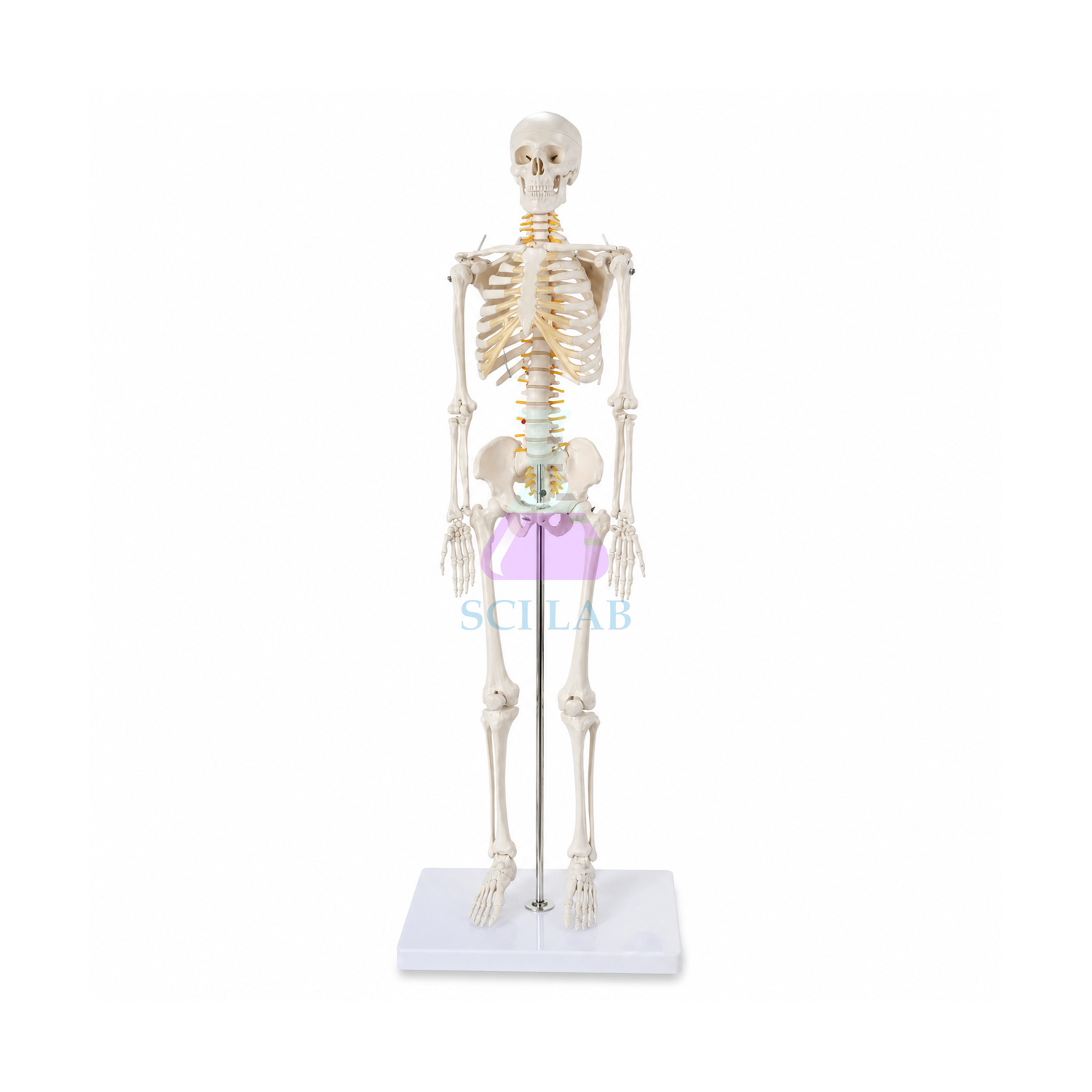
Product Code : SCL-BLE-11781
The Human Skeleton Model 45 cm is a 450 mm three-dimensional skeleton in PVC, coloured with non-toxic dyes and standing on a metal base. The lower jaw moves and the feet are hinged, so students can watch two joints work while they learn the main bones on a desktop figure.
Specifications of the 45 cm Human Skeleton Model
| Specification | Value |
|---|---|
| Item | Three-dimensional human skeleton model |
| Length | 450 mm (45 cm) |
| Material | PVC, coloured with non-toxic dyes |
| Base | Metal |
| Moving parts | Movable lower jaw, hinged feet |
| Supplied by | Science Lab Supplies, Ambala, India |
Bone and Joint Lessons with the 45 cm Skeleton
The model stands on a desk where a small group can turn it and point to each bone. Students name the body regions first, then look at how the bones meet at joints.
- Main bones (Class 6 and 11): find the skull, backbone, ribcage, shoulder girdle, pelvis and limb bones, and say what each protects or supports.
- Joints: open and close the lower jaw and move the hinged feet, then compare them with the life-size shoulder, knee, hip, elbow and wrist in the Human Joints Model lab (Set of 5).
- Skull detail: use the Human Skull Model, numbered with a key card, to name skull bones too small to study on a 45 cm figure.
Care: lift the model by its base, not by the limbs, and keep it away from heaters, which can soften PVC.
Frequently Asked Questions
When is a 45 cm skeleton a better choice than a life-size one?
Choose the 45 cm model where space is short or each group needs its own skeleton on the bench. A life-size skeleton suits detailed anatomy, nursing and medical teaching, where every bone and surface feature is studied at true size.
How should a small skeleton model be cleaned and stored?
Dust it with a soft brush and wipe the PVC with a damp cloth and mild soap; avoid solvents. Store it upright on its metal base under a cover or in a cupboard, away from direct sun and heaters.
How much detail can a skeleton of this size show?
At 45 cm the main bones and their positions are clear, which suits school lessons. Small bones of the hands, feet and skull, and fine surface marks, are usually simplified at this scale, so detailed study needs a larger model.
Which joint lets the lower jaw move?
The temporomandibular joint, just in front of each ear, links the lower jaw to the skull. It is a synovial joint that allows opening, closing and some side-to-side movement for chewing. The lower jaw is the only freely movable bone of the skull.
Where are hinge, ball-and-socket and pivot joints found?
Hinge joints at the elbow, knee and fingers move in one plane. Ball-and-socket joints at the shoulder and hip allow movement in all directions. The pivot joint between the atlas and axis vertebrae lets the head turn.
Why are the joints between skull bones called immovable?
The flat bones of the skull meet at sutures, fibrous joints in which the bones are locked together by dense connective tissue. They allow no movement in adults, which keeps the brain case rigid.
Related Human Skeleton Models
- Human Skeleton - 85 cm: shows the bones with the spinal nerves, and the costal cartilage in a different colour.
- Human Skeleton Model, Life Size PVC: 170 cm, with removable arms and legs.
- Mini Human Skeleton Model: 46 cm, with detachable joints on an ABS stand.
- Human Skeleton Model, Small Plastic: about 30 cm tall, on a plastic stand with a metal rod.
- Disarticulated Human Skeleton Model: life-size set of about 200 separate bones.
- Human Skeleton Chart: laminated wall chart, 70 x 100 cm.
Larger skeletons and joint models share the Skeleton, Bones and Joints Model category with this 45 cm figure; heart, lung and torso models are in Human System Model.
This 45 cm skeleton can be shipped to Bangladesh, Zambia, Rwanda, South Africa, Qatar and Sri Lanka by Science Lab Supplies under its Importer-Exporter Code. Fill in the contact page or add the model to the enquiry cart when you need a quotation.
Last updated: 16 November 2026


