Classroom Sound Amplification Demonstrator
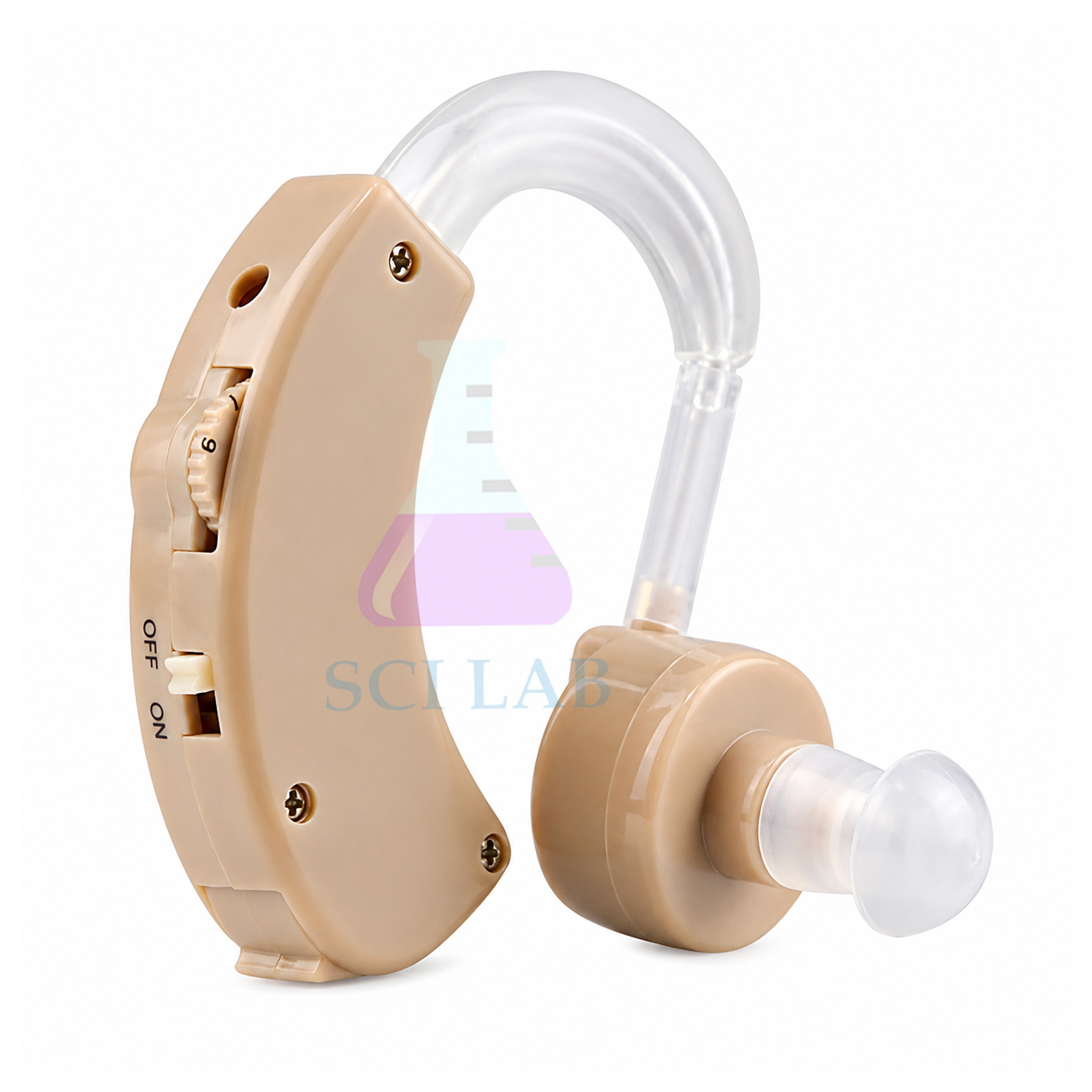
Product Code : SCL-BLE-11743
The Classroom Sound Amplification Demonstrator shows how sound is picked up and made louder. A microphone feeds a portable low-voltage audio amplifier with a six-level volume control, and the sound reaches the listener through a wired earpiece. The kit runs on two supplied AAA batteries, an isolated low-voltage supply, and comes with a quick guide. Low-frequency noise control and low internal noise keep the output clear.
Specifications of the Sound Amplification Demonstrator
| Specification | Value |
|---|---|
| Type | Classroom sound-amplification demonstrator |
| Signal path | Microphone, low-voltage audio amplifier and wired earpiece |
| Kit contents | Portable amplifier, wired earpiece, quick guide |
| Power | 2 AAA batteries, supplied in the kit: an isolated low-voltage supply |
| Volume control | 6 adjustable levels |
| Noise control | Low-frequency noise control |
| Operation | Simple controls, low noise |
| Supplied by | Science Lab Supplies, Ambala, India |
Demonstrating Sound Amplification in Class
Fit the two AAA batteries, plug in the wired earpiece and start at the lowest of the six volume levels, raising it one step at a time so each change can be judged. The unit shows how amplification works; matching a device to a person's hearing loss is the work of a hearing professional.
- How it works (Class 9 to 12): follow the signal from microphone to amplifier to the wired earpiece, then compare it with the natural path of sound on the Human Ear Model, 6x Enlarged.
- Pitch and loudness: strike forks from the Tuning Fork Set near the microphone to show that pitch depends on frequency, while each step of the volume control changes only the loudness.
- Decibels: each 10 dB step is ten times the sound intensity, so a 20 dB rise means a hundred-fold rise in intensity.
Precautions: keep the amplifier dry, wipe the earpiece clean between students, avoid high volume, which gives uncomfortable loud output and whistling feedback, and take the batteries out before the kit is stored.
Frequently Asked Questions
Can the noise control remove all background noise?
No. An amplifier raises wanted and unwanted sound together, and no noise control removes every background sound. The low-frequency noise control on this unit lowers some steady low-pitched sounds, such as fan or motor hum, so speech is easier to pick out in class.
What should an importer check about medical device rules?
In many countries hearing aids are regulated as medical devices, with rules on registration, labelling and who may sell or fit them, while simple sound amplifiers are often treated differently. This unit is offered as a classroom sound-amplification demonstrator with no clinical claim, so importers should check how their own country classes such amplifiers.
Which parts carry the sound through the demonstrator?
A microphone picks up sound and turns it into an electrical signal. The low-voltage audio amplifier makes that signal stronger, with the volume control setting how much, and the wired earpiece turns it back into sound at the ear. Hearing aids use the same three stages.
How does a sound amplifier demonstrator differ from a clinical hearing aid?
A clinical hearing aid is a medical device chosen and set for one person's measured hearing loss. A classroom sound amplifier, like this unit, simply makes sound louder through an earpiece, with a volume control, so students can study amplification. It is not set to any person's hearing.
Can too much amplification harm hearing?
Yes. Very loud sound can damage the hair cells of the inner ear, so output should stay at a comfortable level. Begin on the lowest of the six volume levels, raise it slowly and keep each student's listening turn short.
Which kind of hearing loss involves the outer or middle ear?
Conductive hearing loss, where sound is held back before it reaches the inner ear, for example by wax, fluid or damaged ossicles. Sensorineural loss starts in the inner ear or the hearing nerve. The difference is a common topic in hearing lessons.
Related Sound and Hearing Items
- Microphone: crystal microphone in a moulded plastic box with a 4 mm connection, for showing voice waveforms on an oscilloscope.
- Demonstration Loudspeaker: 125 mm, 8 ohm speaker in a beech wood and acrylic frame, with 4 mm sockets on the front.
- Digital Sound Meter: pocket sound level meter reading 30 to 130 dB with A or C weighting.
- Human Ear Model, 3 Parts: 4 to 5 times larger than life, with removable eardrum, malleus and incus.
This demonstrator is listed in the Sound and Acoustics range, one of the sections of Physics Lab Equipment.
Science Lab Supplies can export this amplifier demonstrator to Vietnam, Malaysia, Peru, Egypt, Iraq and Nigeria under its Importer-Exporter Code, subject to each country's own rules for such devices. Ask about it through the contact page, or place it in the enquiry cart with other items for a single quotation.
Last updated: 20 November 2026