Electric Motors
Product Code : SCL-PL-11830
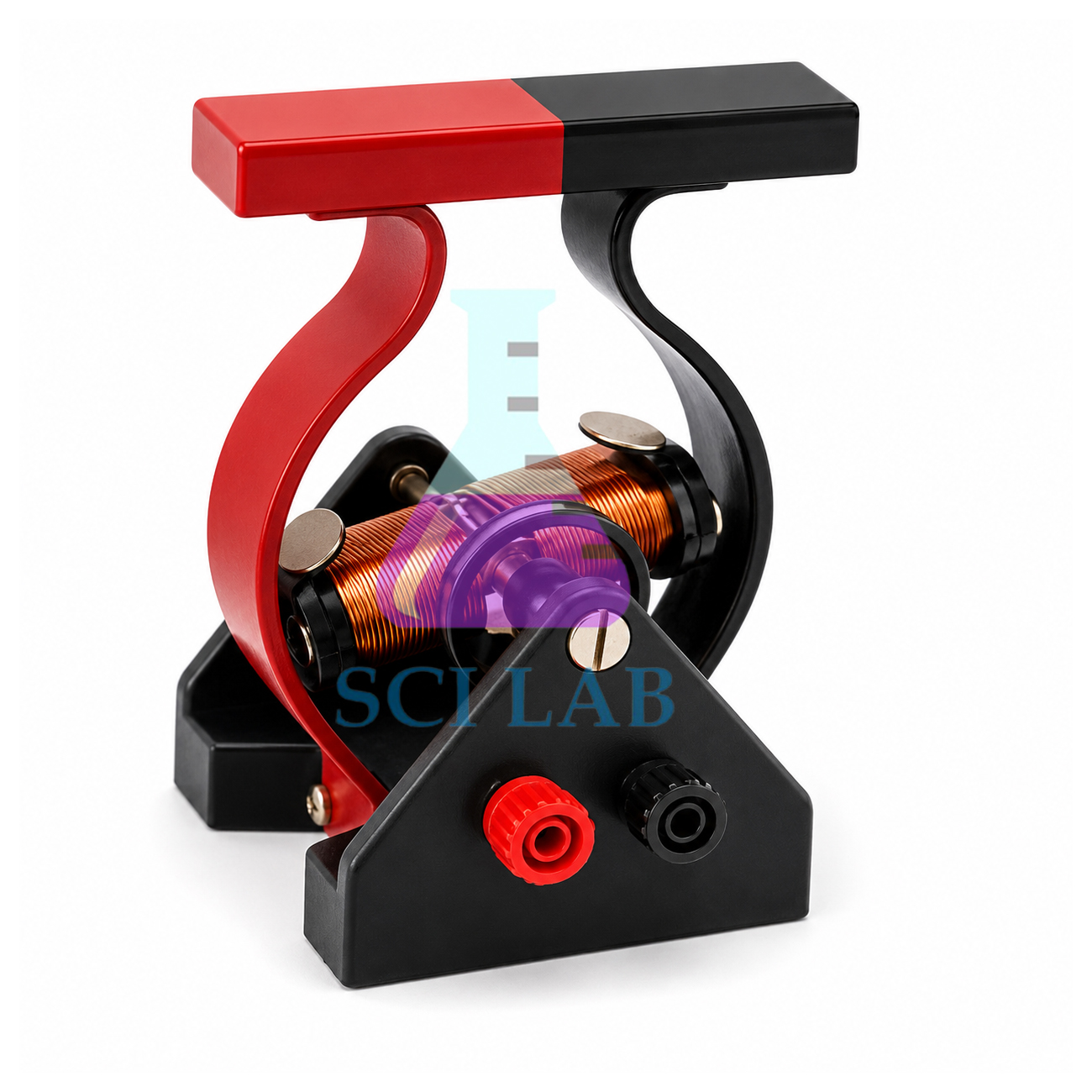
Electric Motors (SKU SCL-PL-11830) is a parts set for building and studying simple electric motors, with magnets, coils, shafts, support bases and a 2–14 V AC/DC power supply. It lets pupils see how a current-carrying coil turns in a magnetic field, and suits Class 10 science and Class 12 physics. Science Lab Supplies manufactures the set at its factory, Plot 448, HSIIDC Industrial Area, Saha, Ambala, India, supplying schools, colleges, tender contractors and distributors directly.
Specifications
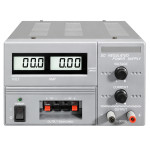
Most structural parts come in sixes: six reinforced mild steel rods, six support bases and six cylindrical shafts, with twelve iron magnets, twenty-four plastic levers and twelve pins. A copper wire coil, a cylindrical coil and a 2–14 V AC/DC, 6 A supply complete the set.
| Parameter | Value |
|---|---|
| SKU | SCL-PL-11830 |
| Frame parts | 6 mild steel rods with reinforcement; 6 support bases; 6 cylindrical shafts |
| Magnets | 12 iron magnets |
| Coils | Copper wire coil; cylindrical coil |
| Small parts | 24 plastic levers; 12 pins |
| Power supply | 2–14 V AC/DC, 6 A |
| Leads | 1 pair of wires with clamps |
| Manufacturer | Science Lab Supplies, Saha, Ambala, Haryana |
| Country of origin | India |
Applications and Experiments for the Electric Motors Set
The set turns the motor principle into a hands-on build: a coil carrying current between magnets feels a force and rotates on its shaft. It fits the electric motor topic of CBSE/NCERT Class 10 science and the force on a current-carrying conductor in Class 12 physics.
- Class 10 science (Magnetic Effects of Electric Current): the working of an electric motor.
- Class 12 physics: force and torque on a current-carrying coil in a magnetic field.
- Investigating how supply voltage and magnet placement affect the rotation.
Set the supply to a low voltage first and raise it gradually; switch off before touching the coil, which can warm up during long runs.
Standard Scope of Supply
The set is supplied with six reinforced mild steel rods, twelve iron magnets, six support bases, six cylindrical shafts, the 2–14 V AC/DC power supply, one pair of wires with clamps, twenty-four plastic levers, twelve pins, a copper wire coil and a cylindrical coil.
Packing, MOQ and Lead Time
Quotations can be for one set or several for a whole class, each showing the packing, delivery time and price for the requested quantity. Horseshoe magnets, a ready-made small motor or an electromagnet set can be added to the same quotation for comparison.
Science Lab Supplies, a registered exporter with an Importer-Exporter Code, can ship to buyers in Sri Lanka, Vietnam, Malaysia, Peru, Egypt and Iraq. Please send enquiries through the contact page or add products to the enquiry cart; tendering institutions will find guidance on the lab tender page.
Frequently Asked Questions
What is the Electric Motors set used for?
It is used to build simple motors from separate parts and study how a current-carrying coil rotates between magnets, supporting the electric motor lessons of Class 10 and Class 12.
Is a power supply included?
Yes. The set comes with a 2–14 V AC/DC power supply rated at 6 A, plus a pair of wires with clamps for connecting it to the coil.
Is Science Lab Supplies the manufacturer or a trader?
The set is manufactured by Science Lab Supplies itself at its factory in Saha, Ambala, India, and quotations are prepared there, so there is no trader involved.
Related Electromagnetism Equipment
A motor build connects to several nearby topics: ready-made motors, electromagnets, transformers and permanent magnets. These four Physics Lab items cover each of them, so a teacher can compare a home-built motor with other devices, and all four can join this set on one quotation.
- Electric Motor — miniature DC motor for 1.5–4.5 V.
- Electromagnet Set — lifts hooked masses to show current and field strength.
- Transformer Parts Kit — coils of several turn counts with a U and I core.
- Pair of Horseshoe Magnets with Keeper — 100 mm steel magnets.
Browse the full Physics Lab range or all physics lab equipment.
Last updated: 25 September 2026