Ecological Pyramid Chart
Product Code : SCL-BLE-11759
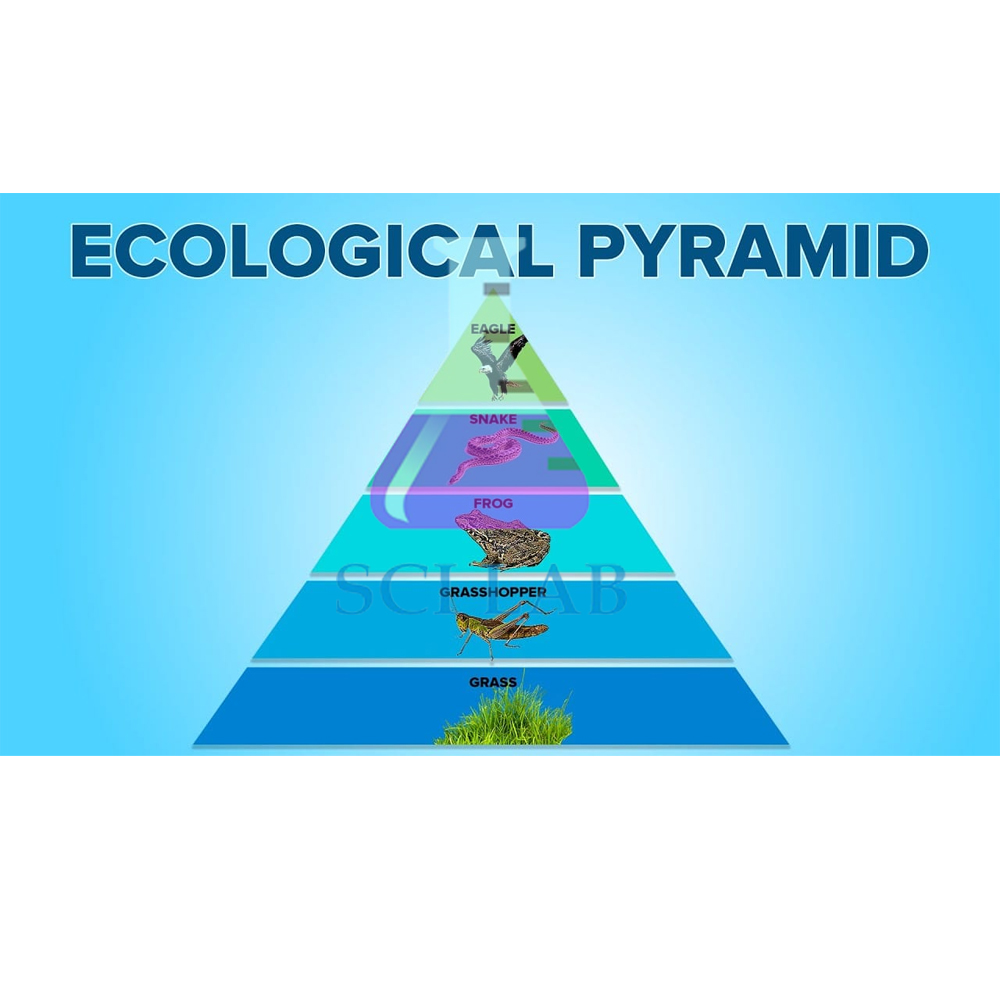
The Ecological Pyramid Chart is a laminated 70 x 100 cm wall chart of the trophic pyramid: producers form the base, with primary consumers and the higher consumer levels above. The labels are in English, and rods at the top and bottom with a top hanging cord keep the sheet flat on a laboratory or classroom wall.
Specifications of the Ecological Pyramid Chart
| Specification | Value |
|---|---|
| Subject | Ecological pyramids (trophic levels) |
| Artwork | Trophic pyramid with producers at the base, then primary consumers and higher trophic levels |
| Label language | English |
| Finish | Laminated |
| Size | 70 x 100 cm (700 x 1000 mm) |
| Mounting | Wall mounted |
| Hanging fittings | Rods at the top and bottom, hanging cord at the top |
| Use | Laboratory and classroom |
| Manufacturer | Science Lab Supplies, Saha, Ambala, India |
Building Pyramids from Field Data
Students collect simple counts outdoors, sort the organisms into feeding levels and draw their own pyramid. The chart is the model they check their drawing against, level by level from the producers up.
- Field count (Class 10 to 12): lay a Folding Quadrat on grass, count the plants and small animals inside, and sort them into producers and consumers.
- Sweep sample (Class 8 to 10): sweep long grass ten times with an Insect Collecting Net, 12-inch Iron Ring, 30-inch Wooden Handle, then count the plant-eating insects and the spiders that hunt them.
- Food chain to pyramid: pick one chain from the Forest Food Chain Chart and turn it into a pyramid of numbers.
- Energy sums: start with 10,000 kJ in the producers and work out what reaches the third and fourth levels at about one tenth per step.
Common errors: drawing every pyramid upright, placing decomposers as an extra level at the top, and putting an omnivore on one level only. Release the animals after counting.
Frequently Asked Questions
Which pyramid types should a buyer check the chart covers?
Senior syllabi cover pyramids of numbers, biomass and energy, including inverted examples. This chart shows the trophic pyramid itself: producers at the base, then primary consumers and the higher levels. Students can build the inverted cases themselves from field or lake data.
Which charts can be ordered with it for an ecology display?
The range includes food chain, food web, food pyramid and ecosystem charts in the same 70 x 100 cm laminated format. They cover the forest, a lake and the sea. Hung together they make one ecology wall.
Does a wall chart need a student copy for written work?
Usually yes. The wall chart serves the whole class as a reference. For written work, teachers hand out an outline pyramid that each student labels and fills with numbers from a food web, then checks against the chart.
Can a pyramid of numbers be upside down?
Yes. One large tree can feed thousands of insects, so the producer bar is narrower than the herbivore bar. Parasites living on a single host give the same inverted shape.
Why is the pyramid of energy never inverted?
Energy is lost as heat, movement and waste at every feeding level, so each level always holds less energy than the one below it. That is why energy pyramids are always upright.
Is the 10 per cent rule exact?
No. It is an average used for simple sums. The real share of energy passed on varies, roughly from 5 to 20 per cent, with the kind of organism and how much of its food it can digest.
Related Ecology Wall Charts
- Lake Food Pyramid Chart: laminated chart, 70 x 100 cm, for wall mounting.
- Lake Food Web Chart: laminated, 70 x 100 cm, wall mounted.
- Marine Food Chain Chart: laminated, wall-mounted chart in the same size.
- Forest Ecosystems Chart: 70 x 100 cm laminated chart for laboratory and classroom use.
- Balance of Nature Chart: laminated wall chart, 70 x 100 cm.
All the ecology wall charts appear in Charts & Portraits, part of Educational Lab Equipment.
Schools in Bangladesh, Zambia, Rwanda, South Africa, Qatar and Sri Lanka can order this ecology chart for export, under the Importer-Exporter Code of Science Lab Supplies. The contact page and the enquiry cart both accept quotation requests.
Last updated: 19 November 2026
.jpg)
.jpg)


.jpg)