Blue Litmus Paper
Product Code : SCL-CL-11606
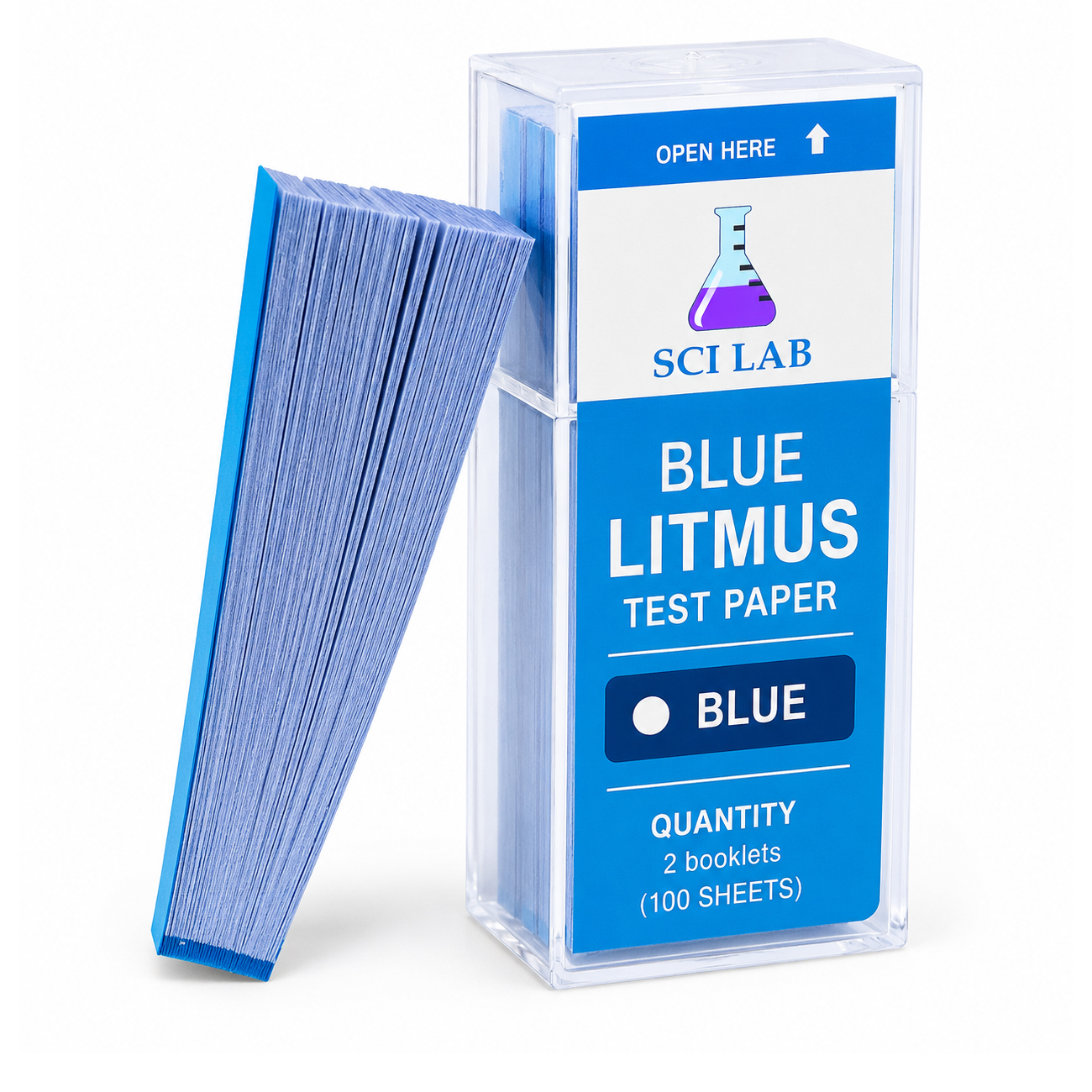
Blue Litmus Paper is an indicator paper for detecting acids. An acid turns the blue paper red. A base or a neutral substance leaves it blue, so the paper alone shows only whether a sample is acidic or not.
Specifications of the Blue Litmus Paper
| Specification | Value |
|---|---|
| Indicator colour | Blue |
| With acids | Turns red |
| With bases | No change, stays blue |
| With neutral substances | No change, stays blue |
| Supplied by | Science Lab Supplies, Ambala, India |
Acid Tests with Blue Litmus Paper
Tear off a short strip and touch it with a drop of the sample, or dip one end in the liquid. Read the colour at once against a white tile or sheet. Use a fresh piece for every sample.
- Sorting household liquids: put lemon juice, vinegar, soap solution and tap water in small beakers such as the 50 ml Glass Beaker and test each one.
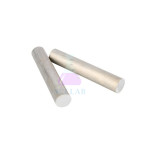
- Acid or not: transfer a drop with a clean Glass Rod, so the paper is not dipped into stock bottles.
- Telling bases from neutral liquids: a sample that leaves blue litmus blue is then checked with Red Litmus Paper.
Common errors: using one strip for several samples, touching the test area with wet or dirty fingers, and reading the colour after the strip has dried.
Frequently Asked Questions
Why does blue litmus stay blue in a base?
Blue is the colour litmus already shows in basic and neutral conditions. Only an acid changes it, to red. To find out whether a sample is basic or neutral, test it with red litmus as well.
Can blue litmus show how strong an acid is?
No. Litmus gives a yes or no answer: red means acidic. It does not give a pH value. For a number, use universal indicator paper or a pH meter.
How long should the strip stay in the sample?
Dip only the end of the strip and take it out at once. A long soak washes dye into the sample and can blur the colour, while a quick dip shows the change clearly.
Where does the litmus dye come from?
Litmus is a natural mixture of dyes extracted from certain lichens. The paper is soaked in the dye, and blue litmus paper carries the dye in its blue, non-acid form.
Why use a fresh strip for each sample?
A used strip still holds traces of the last liquid, which can change the colour on the next test. A new piece for every sample keeps each result separate.
Related pH Test Papers and Meters
- Universal pH Indicator Paper, pH 0-14: test paper for the pH range 0–14.
- Test Paper Books: books of cobalt chloride, lead acetate, litmus, pH 1–14 and starch-iodide papers.
- pH Pocket Tester: waterproof pocket meter showing pH 0.0–14.0 and temperature.
- The Acid-Basic Environment of The Solution: laminated wall chart, 70 cm x 100 cm.
- Acids and Bases Kit: student materials for metal-acid reactions, indicator dyes and titration.
More indicators and glassware are in the Chemistry Lab range; the parent School Lab Equipments section covers other subjects.
Science Lab Supplies holds an Importer-Exporter Code and can ship to buyers in Zambia, Rwanda, South Africa, Qatar, Sri Lanka and Vietnam. To ask for a quotation, use the contact page or the enquiry cart.
Last updated: 14 November 2026


.jpg)