Beakers, Tablet Disintegration
Product Code : LSK-GB-10383
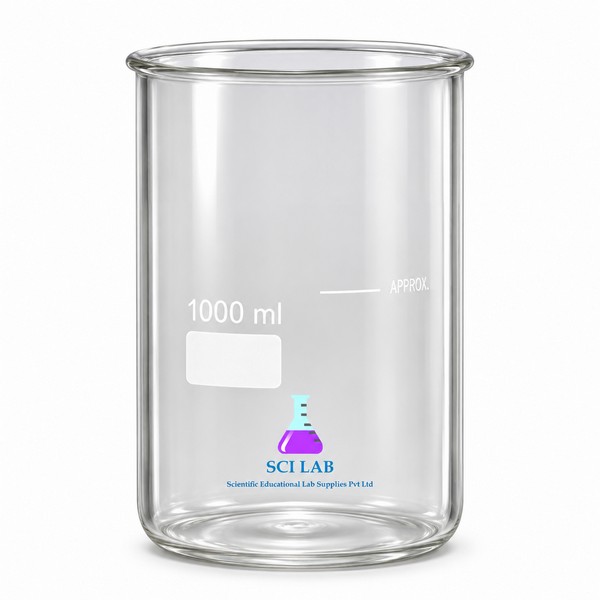
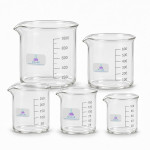
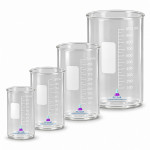
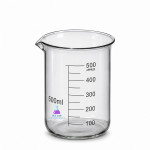
Beakers, Tablet Disintegration are 1000 ml low-form vessels in borosilicate glass 3.3, designed for a tablet disintegration machine, about 100 to 105 mm inside diameter and 138 to 160 mm high. Each beaker holds the test medium in which the basket-rack assembly moves up and down. A large, durable labelling field allows easy marking, and the beaker is highly resistant to chemical attack.
Specifications of the Tablet Disintegration Beakers
| Specification | Value |
|---|---|
| Designed for | Tablet disintegration machine |
| Capacity | 1000 ml nominal |
| Material | Borosilicate glass 3.3 |
| Form | Low form |
| Inside diameter | About 100-105 mm |
| Height | About 138-160 mm |
| Chemical resistance | Highly resistant to chemical attack |
| Marking | Large, durable labelling field |
| Manufacturer | Science Lab Supplies, Saha, Ambala, India |
Disintegration Testing in the Pharmaceutics Lab
The beaker sits in the tester's water bath and is filled with the immersion medium. The basket holding the tablets is raised and lowered in it, and the time until no firm residue is left on the mesh is recorded.
- Uncoated tablets (B.Pharm and D.Pharm practicals): fill with water or the medium the monograph names, bring it to about 37 °C and check it with Laboratory Thermometers.
- Medium preparation: measure acid or buffer media in a Measuring Cylinder Glass and check buffer pH with a Bench pH Meter.
- Enteric-coated tablets: run the acid stage first, then empty the beaker, rinse it and refill it with buffer for the second stage.
Label each beaker on its marking field with the medium and the station, and fill only to the level the tester's instructions give.
Frequently Asked Questions
How can a lab check that these beakers fit its disintegration tester?
Compare the outside diameter, wall thickness, height and rim with the openings in the tester's water bath, and check that the basket can travel its full stroke without touching the wall or bottom. These beakers are about 100 to 105 mm inside and 138 to 160 mm high; testers differ between makes, so check the tester's drawing or manual before ordering spares.
How many beakers does a disintegration tester use?
One beaker per basket-rack station. A single-station tester takes one, a two-station unit takes two, and so on. Keeping one spare per tester means a cracked or stained beaker does not stop routine testing.
Why is the medium kept near body temperature during the test?
The test models how a tablet breaks up in the stomach or intestine, so the medium is held at about 37 °C. A colder or warmer medium changes how fast the binder and disintegrant work and gives times that cannot be compared.
How are enteric-coated tablets tested in these beakers?
In two stages. The tablets first run in an acid medium, where the coating should hold. The beaker is then emptied and refilled with a buffer of higher pH, and the tablets must break up within the time the pharmacopoeia sets.
Related Pharmacy Testing Glassware
- Dissolution Vessel, Flask D, 1000 mL, Borosilicate Glass, Without Side Cut: heat-resistant borosilicate glass flask graduated in 50 ml intervals for dissolution testing.
- Amber Dissolution Vessel, Flask E, 1000 ml, Without Side Cut: amber borosilicate flask of 1000 mL, 131 mm in diameter and 173 mm high.
- Glass Reagent Bottle With Screw Cap: 250 ml borosilicate 3.3 bottle with a GL45 polypropylene screw cap.
- Volumetric Flask: 100 ml Class A flask in borosilicate 3.3 glass with one ring mark.
- Hot Plate With Stirrer: magnetic stirrer hot plate with temperature control adjustable to 450 °C.
Further beaker types are grouped under Glassware Beaker; dissolution flasks sit in Laboratory Flasks.
Pharmacy colleges and testing labs in Iraq, Nigeria, Kenya, Ghana, Ethiopia and Tanzania can source these beakers from Science Lab Supplies, an Importer-Exporter Code holder. Their quotation can start with an entry in the enquiry cart or a note on the contact page.
Last updated: 20 November 2026

.jpg)